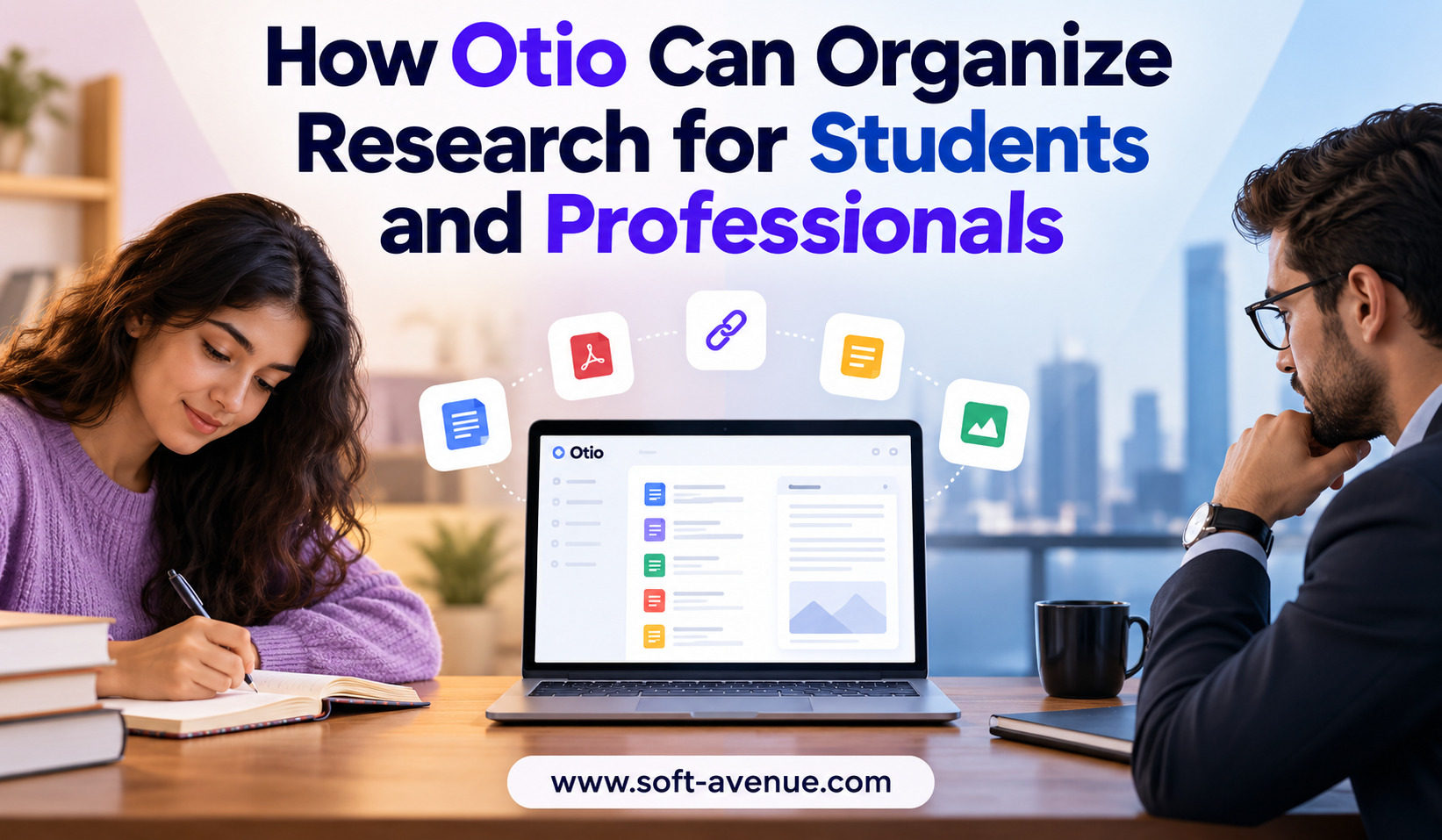
Research can quickly become difficult to manage when information comes from dozens of articles, academic papers, websites, videos, PDFs, and online documents. Students may have multiple sources for an assignment or dissertation, while professionals often need to collect and evaluate information before making business decisions.
This is where AI-powered research platforms such as Otio can be useful. Otio is designed to help users collect research materials, understand information, organize sources, and turn scattered content into a more structured workflow.
Instead of switching constantly between browser tabs, notes, documents, and separate AI tools, users can bring much of their research process into one workspace. This can make the journey from finding information to producing useful work more organized.
What Is Otio?
Otio is an AI-powered research workspace designed to support different stages of the research process. Rather than functioning only as a traditional note-taking application, it combines tools for collecting information, analyzing content, and working with research materials.
Users can gather sources such as web pages, academic papers, documents, and other research content. AI features can then help make that information easier to understand and work with.
For students, this can be useful when researching essays, presentations, literature reviews, projects, and dissertations. Professionals can potentially use a similar workflow for market research, reports, competitive analysis, industry research, and strategic projects.
The main idea is simple: reduce the amount of time spent organizing research manually so more attention can be given to understanding and using the information.
Collecting Research in One Place
One of the biggest challenges with online research is information scattered across different locations. You might save an article in your browser, download a PDF, copy notes into a document, and bookmark another source somewhere else.
After a few days, finding everything again can become surprisingly difficult.
Otio can provide a centralized environment for collecting research materials. Instead of keeping important sources in unrelated locations, users can bring relevant information into their research workflow.
This organization can be particularly helpful for large projects. When a student is researching a topic over several weeks, having sources gathered together makes it easier to return to useful information later.
Professionals can benefit in a similar way when research involves multiple competitors, industries, reports, publications, or market sources.
Making Long Sources Easier to Understand
Research often involves lengthy documents that take considerable time to read. Academic papers, industry reports, and technical documents may contain valuable information, but finding the most relevant sections can be challenging.
AI can help users interact with these materials more efficiently. Instead of treating every document as something that must be read from beginning to end before any useful information can be extracted, users can work with AI-assisted summaries and questions.
For example, a student could use an AI research tool to identify the main argument of a paper, locate important findings, or clarify a complicated section.
A professional researching an industry report might want to identify major trends, key statistics, or conclusions before deciding which sections require deeper reading.
This does not eliminate the need to read important sources. Instead, it can help users identify where their attention is most valuable.
Asking Questions About Research Materials
One useful aspect of AI-assisted research is the ability to ask questions about collected information.
Traditional research often involves reading a source, taking notes, and manually searching through it later. AI can provide another layer of interaction by allowing users to ask questions in natural language.
For example, a student researching artificial intelligence could ask what a particular paper says about a specific issue. A professional could ask an AI system to identify common themes across several documents.
The value of this approach comes from reducing friction. Users can explore information through questions rather than repeatedly searching manually through long documents.
However, AI-generated answers should always be checked against the original source, especially when research is being used for academic, legal, financial, scientific, or professional purposes.
Organizing Notes and Ideas
Good research is not simply about collecting more information. It is about creating connections between useful information.
A large collection of sources can become difficult to manage if notes are not organized. Otio’s research-focused workflow can help users move from collecting information toward building a more structured understanding of a topic.
Students can organize material around themes, arguments, evidence, and research questions. Professionals can use similar structures for business reports, client projects, product research, or market analysis.
This can make the transition from research to writing easier because important information is already grouped and accessible.
Helping Students With Academic Research
Students frequently spend a significant amount of time searching for sources and trying to understand complicated academic material.
Otio can potentially simplify parts of this process by giving students a place to collect sources and use AI assistance while exploring them.
For an essay, a student might gather several relevant papers and online resources before examining their main arguments. During the research stage, AI-assisted tools can help summarize material or answer questions about the collected sources.
For larger academic projects, such as dissertations or thesis work, organization becomes even more important. A structured research workspace can help students keep track of information as the project develops.
Students should still follow their institution’s academic-integrity rules. AI should support research and understanding rather than replace original thinking, proper citations, or independent analysis.
Supporting Professional Research
Research is also a regular part of professional work.
A marketing team may investigate customer trends. A startup may research competitors. A consultant may analyze an industry. A product team may study customer needs and technical developments.
In these situations, research can involve dozens or even hundreds of sources.
An AI-powered research workspace can help professionals reduce the administrative burden associated with collecting and reviewing information. Instead of spending excessive time managing tabs and scattered notes, they can focus more on identifying insights.
This can be particularly useful when research needs to be revisited later. A well-organized collection of sources provides a useful reference point for future projects.
Turning Research Into Better Writing
Research and writing are closely connected. When source material is organized effectively, writing becomes easier because the evidence and ideas needed for the final piece are already accessible.
Otio can support this transition by helping users work with their collected research rather than simply storing links.
A student preparing a paper can move from source discovery to understanding key arguments and organizing relevant evidence. A professional preparing a report can similarly use collected research to develop a clearer structure.
The important point is that AI should assist the process rather than automatically determine the final argument. Human judgment remains essential for deciding which evidence is credible, relevant, and appropriate.
Why Research Organization Matters
Poor research organization can create several problems. Important sources may be lost, useful quotes may be difficult to locate, and users may accidentally repeat the same research.
Organization also helps users distinguish between information they have already evaluated and sources they still need to investigate.
By creating a more structured research process, tools like Otio can potentially save time while reducing unnecessary repetition.
The goal is not simply to collect the largest possible number of sources. Strong research depends on finding relevant information, evaluating its reliability, understanding it, and using it appropriately.
Limitations to Keep in Mind
AI research tools are useful, but they are not perfect.
AI can misunderstand context, produce inaccurate summaries, overlook important details, or make incorrect conclusions. Users should therefore verify important claims by checking the original material.
Source quality also matters. An AI tool cannot automatically make an unreliable source trustworthy. Academic databases, reputable publications, official reports, and primary sources should remain important parts of a serious research workflow.
Privacy is another consideration. Before uploading sensitive professional documents or confidential information, users should understand how a platform handles their data.
Final Thoughts
Otio can be a useful option for students and professionals who want to make research more organized and easier to navigate. By bringing source collection, AI-assisted analysis, note organization, and research exploration into a more connected workflow, it can reduce some of the friction involved in information-heavy projects.
For students, the platform can help manage sources and understand academic material more efficiently. For professionals, it can support research-intensive tasks such as market analysis, reporting, competitive research, and strategic planning.
The biggest benefit comes from using AI as a research assistant rather than treating it as a replacement for human judgment. Verify important information, evaluate sources carefully, maintain proper citations, and use your own reasoning when turning research into conclusions.
When used thoughtfully, an AI-powered research workspace can turn a messy collection of tabs, documents, and notes into a clearer path from information discovery to useful insight.
