Introduction
The logistics industry is undergoing a major transformation as businesses increasingly adopt artificial intelligence (AI) to improve fleet operations. Rising fuel costs, growing customer expectations for faster deliveries, and increasingly complex supply chains have made efficient route planning more important than ever. Traditional fleet management often relied on manual planning and historical data, which made it difficult to respond to changing road conditions, weather, or unexpected delays.
Today, AI-powered logistics tools analyze real-time traffic, vehicle locations, delivery schedules, fuel consumption, and driver performance to recommend the most efficient routes. Instead of simply finding the shortest path, these systems consider multiple variables to reduce travel time, lower operating costs, and improve on-time deliveries. As a result, fleet operators can serve more customers while using fewer resources.
Why AI Is Becoming Essential in Fleet Management
Fleet managers face daily challenges such as traffic congestion, rising fuel prices, vehicle maintenance, and delivery deadlines. AI helps solve these problems by processing large volumes of operational data in real time and recommending better decisions.
Rather than manually adjusting routes throughout the day, AI continuously monitors changing conditions and automatically suggests alternative routes whenever accidents, road closures, or severe weather affect deliveries. This enables businesses to maintain reliable delivery schedules while reducing unnecessary mileage.
AI also improves visibility across the fleet. Managers can track vehicle locations, monitor driver behavior, and identify potential delays before they become major problems. This proactive approach helps businesses improve customer satisfaction while reducing operational costs.
How AI Optimizes Fleet Route Management
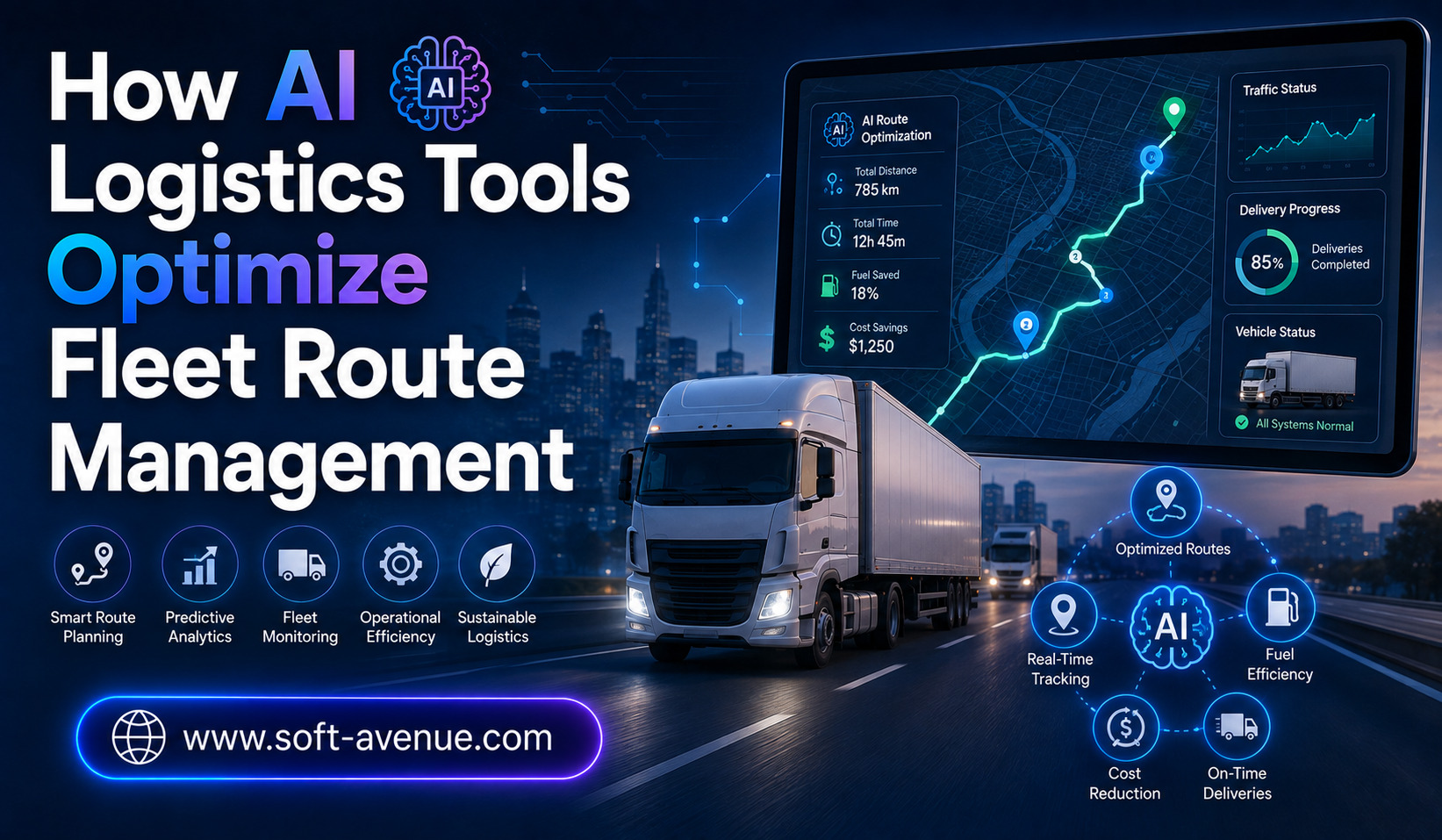
AI route optimization combines machine learning, GPS technology, predictive analytics, and cloud computing to create efficient delivery plans.
The process begins by collecting data from multiple sources, including GPS devices, traffic reports, weather forecasts, vehicle telematics, and customer delivery schedules. AI analyzes this information to determine the most efficient routes based on current conditions rather than relying on static maps.
As deliveries progress, the system continues monitoring road conditions. If traffic congestion develops or an accident blocks a planned route, AI immediately calculates an alternative path that minimizes delays. This dynamic routing helps drivers stay productive throughout the day.
AI also groups nearby deliveries into optimized schedules, reducing unnecessary travel while maximizing the number of deliveries completed during each trip.
Benefits of AI Route Optimization
Businesses adopting AI logistics platforms often experience measurable improvements across multiple areas.
Some of the biggest advantages include:
- Lower fuel consumption and transportation costs.
- Faster and more reliable deliveries.
- Reduced vehicle wear and maintenance expenses.
- Better driver productivity.
- Improved customer satisfaction through accurate delivery estimates.
Rather than replacing fleet managers, AI provides real-time decision support that helps teams respond quickly to changing operating conditions.
AI Logistics Tools Comparison
| AI Tool | Primary Use | Best For |
| Samsara | Fleet tracking and telematics | Large commercial fleets |
| Motive | Driver safety and compliance | Transport companies |
| OptimoRoute | Route optimization | Delivery businesses |
| Onfleet | Last-mile delivery management | Courier services |
| Verizon Connect | GPS fleet management | Enterprise logistics |
Real-World Applications
AI-powered logistics and route optimization tools are no longer limited to large technology companies or advanced transportation networks. Businesses across transportation, retail, manufacturing, healthcare, and e-commerce are increasingly using AI to make everyday delivery and fleet operations faster, more flexible, and easier to manage. By analyzing information such as traffic conditions, vehicle availability, delivery priorities, customer locations, and historical travel patterns, these systems can help companies make better routing decisions in real time.
In the transportation and delivery sector, AI is helping companies manage large numbers of vehicles and drivers more efficiently. Instead of assigning routes manually, fleet management platforms can automatically consider multiple factors before recommending the most suitable route for each vehicle. If traffic suddenly increases or a road becomes unavailable, the system can identify the problem and suggest alternatives. This helps reduce unnecessary driving time and allows delivery teams to respond more quickly when operating conditions change.
E-commerce companies are also seeing major benefits from AI-based route planning. With online orders continuing to increase, delivery operations often need to handle hundreds or thousands of shipments within a limited time. AI can help group deliveries based on location, prioritize urgent orders, and assign shipments to nearby drivers. This can make the final stage of delivery more efficient while helping businesses provide customers with more accurate delivery windows.
Retail businesses are using similar technology to improve order fulfillment. When a customer places an order for same-day or scheduled delivery, AI can evaluate which available driver or vehicle is best positioned to complete the order. The system can consider the driver’s current location, vehicle capacity, existing delivery schedule, and traffic conditions before making an assignment. This reduces unnecessary travel and can help retailers complete more deliveries without significantly increasing fleet costs.
Challenges of AI Fleet Management
Although AI offers significant benefits, successful implementation requires high-quality data. Inaccurate GPS information, incomplete vehicle records, or outdated maps can reduce optimization accuracy.
Integration with existing logistics software may also require additional investment, particularly for organizations operating large fleets. Employee training is equally important so drivers and dispatchers understand how to use AI recommendations effectively.
Businesses should remember that AI supports decision-making rather than replacing human experience. Fleet managers still play a critical role in handling unexpected situations and maintaining customer relationships.
Conclusion
AI is changing the way businesses approach fleet route management by moving away from traditional, manually planned routes toward smarter and more flexible optimization. Instead of relying only on fixed schedules, maps, and the experience of fleet operators, AI-powered systems can analyze real-time data to identify better routes and respond to unexpected changes on the road.
Traffic congestion, road closures, weather conditions, vehicle availability, delivery priorities, and last-minute customer requests can all affect fleet operations. AI can process these factors simultaneously and help businesses adjust routes as conditions change. This allows vehicles to spend less time stuck in traffic or taking inefficient routes, while fleet teams gain better visibility into what is happening across their operations.
The benefits go beyond faster deliveries. More efficient route planning can help businesses reduce fuel consumption, control transportation costs, improve vehicle utilization, and minimize unnecessary delays. Customers can also benefit from more accurate delivery estimates and improved service reliability. For companies managing large fleets, even small improvements in route efficiency can create significant savings when applied across hundreds or thousands of daily journeys.
Frequently Asked Questions (FAQs)
1. What are AI logistics tools?
AI logistics tools use artificial intelligence to optimize route planning, fleet tracking, scheduling, and delivery operations.
2. How does AI improve fleet route management?
It analyzes traffic, weather, GPS, delivery schedules, and vehicle data to recommend the most efficient routes in real time.
3. Which industries benefit from AI logistics?
Transportation, retail, e-commerce, healthcare, manufacturing, and courier services all use AI logistics solutions.
4. Does AI reduce fuel costs?
Yes. By optimizing routes and minimizing unnecessary travel, AI helps reduce fuel consumption and vehicle operating costs.
5. Can small businesses use AI fleet management?
Yes. Many cloud-based AI logistics platforms are now affordable enough for small and medium-sized businesses. They allow companies to use AI-powered tools for route planning, fleet tracking, and delivery management without investing heavily in expensive software or infrastructure.
