Introduction
Paid advertising has become more competitive than ever, with businesses investing heavily in platforms like Google Ads, Meta Ads, LinkedIn Ads, TikTok, and Amazon Ads to reach potential customers. However, creating ad copy that captures attention, encourages clicks, and drives conversions remains one of the biggest challenges for marketers. Every headline, description, and call-to-action can influence campaign performance, making strong copywriting an essential part of digital advertising.
Artificial intelligence is changing this process by helping marketers generate persuasive ad copy in minutes instead of hours. AI copywriting tools analyze marketing goals, audience preferences, keywords, and brand tone to create multiple versions of headlines, ad descriptions, and CTAs. Instead of replacing human creativity, these tools speed up the writing process and provide fresh ideas that marketers can refine before launching campaigns.
As businesses continue adopting AI in marketing, copywriting platforms are becoming valuable assistants for agencies, freelancers, startups, and enterprise marketing teams. They reduce creative blocks, improve productivity, and support faster campaign testing across multiple advertising platforms.
Why AI Copywriting Is Transforming Paid Advertising
Traditional copywriting often involves brainstorming, researching customer pain points, writing several variations, and testing different messages before identifying the highest-performing advertisement. While this process remains effective, it can be slow when campaigns require dozens of ad variations across multiple platforms.
AI simplifies this workflow by generating high-quality drafts within seconds. It can produce different headlines, descriptions, promotional messages, and calls-to-action while maintaining a consistent brand voice. Marketers can then edit and personalize the content instead of starting from scratch.
Another major advantage is speed. Digital advertising frequently requires quick campaign updates based on seasonal promotions, market trends, or competitor activity. AI enables marketing teams to respond rapidly without sacrificing content quality.
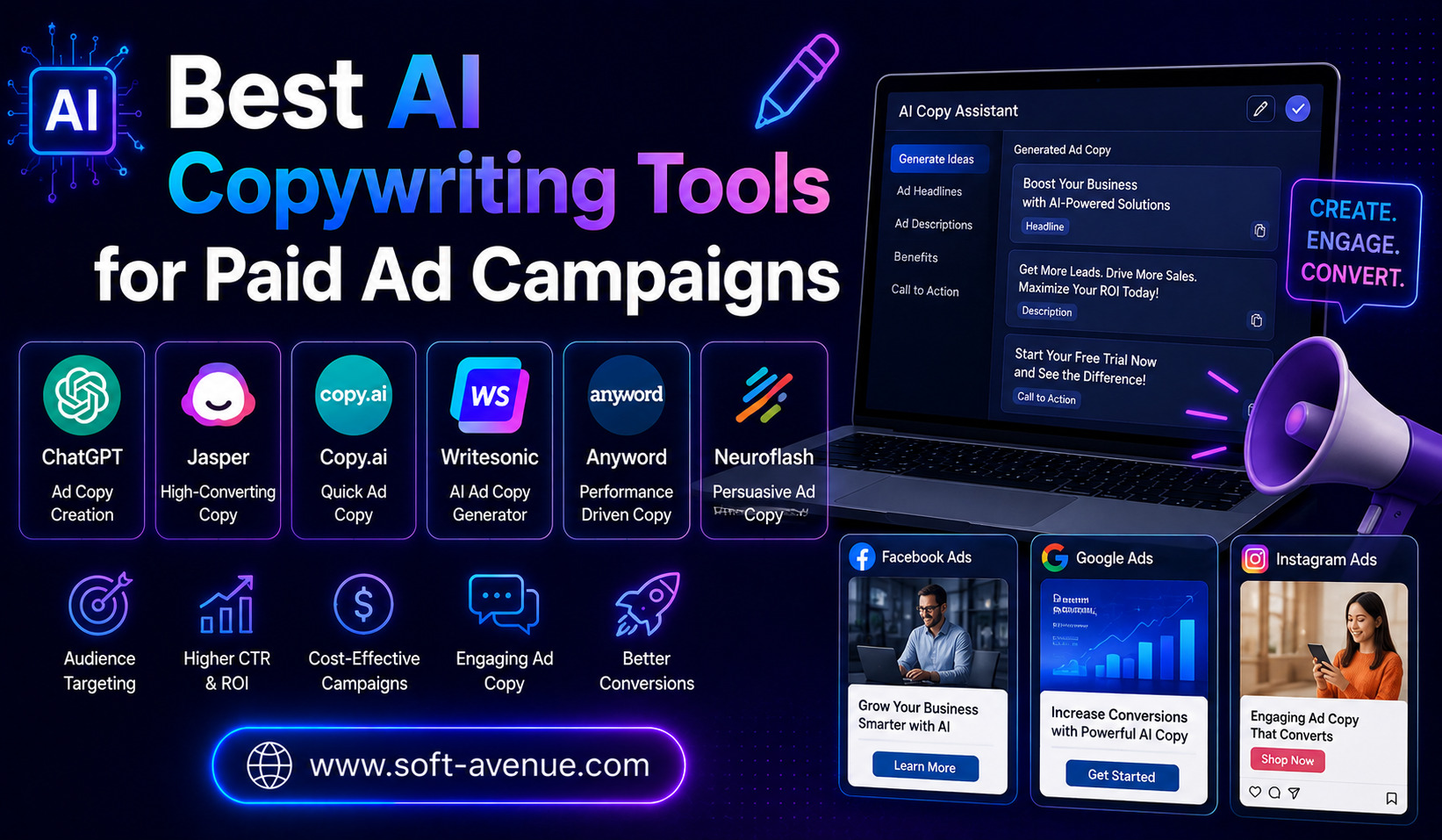
Best AI Copywriting Tools for Paid Ad Campaigns
Several AI-powered platforms have become popular among marketers because of their ability to generate engaging advertising copy.
ChatGPT is widely used for creating Google Ads, Meta Ads, LinkedIn campaigns, email marketing copy, and promotional content. It is particularly useful for brainstorming campaign ideas, writing multiple ad variations, and improving existing copy.
Jasper AI is designed specifically for marketing teams and offers templates for Facebook Ads, Google Search Ads, landing pages, and product descriptions. It helps businesses maintain a consistent brand voice while generating persuasive marketing content.
Copy.ai focuses on fast content generation for digital advertising. Its simple interface allows users to create headlines, promotional offers, and ad copy for different industries without requiring advanced writing skills.
Writesonic combines AI writing with SEO capabilities, making it suitable for businesses that manage both paid advertising and content marketing. It generates multiple ad versions that can be refined for different audiences.
These tools save valuable time while supporting creative experimentation across advertising campaigns.
Comparing Popular AI Copywriting Tools
| AI Tool | Best For | Key Strength |
| ChatGPT | General marketing | Flexible ad copy and campaign ideas |
| Jasper AI | Marketing teams | Brand-focused advertising templates |
| Copy.ai | Quick ad creation | Fast headline and CTA generation |
| Writesonic | Ads and SEO | Multi-channel marketing content |
| Anyword | Performance marketing | AI-driven copy optimization |
Rather than choosing a platform based only on popularity, businesses should evaluate how well each tool fits their workflow, advertising channels, and budget.
Benefits of AI Copywriting for Paid Campaigns
AI-powered copywriting tools provide several important advantages:
- Create multiple ad variations in minutes.
- Reduce time spent writing campaign copy.
- Maintain consistent brand messaging.
- Improve creativity with fresh headline ideas.
- Support faster A/B testing across advertising platforms.
While AI accelerates content creation, marketers should still review and refine the generated copy to ensure it aligns with campaign goals and audience expectations.
Real-World Applications
Businesses across different industries are already using AI copywriting tools to improve advertising performance. E-commerce brands generate product-focused ad copy for seasonal promotions, while SaaS companies create compelling search ads and landing page content to attract qualified leads.
Digital marketing agencies use AI to produce multiple ad variations for different clients, allowing them to test messaging more efficiently. Local businesses also benefit by creating professional advertisements without hiring full-time copywriters.
AI is particularly valuable during A/B testing. Instead of manually writing several versions of the same advertisement, marketers can generate dozens of variations, compare performance, and quickly identify which messaging produces the highest click-through and conversion rates.
Challenges and Limitations
Although AI copywriting tools can make advertising faster and more efficient, they are not a complete replacement for human creativity. AI can create polished, grammatically correct copy in just seconds, but that doesn’t always mean the message will feel genuine or connect with people on an emotional level. Some AI-generated advertisements may sound repetitive, generic, or too similar to common marketing language, particularly when the prompts do not provide enough information about the brand or target audience.
This becomes especially important for campaigns that depend on storytelling, emotion, humor, or a strong brand personality. A human copywriter can pick up on cultural nuances, understand what customers are feeling, and bring out the deeper message a brand wants to share. AI can support this process by generating ideas and variations, but human input is often needed to turn those ideas into advertising copy that feels authentic and memorable.
Businesses should also carefully review AI-generated advertisements before publishing them. AI tools can occasionally produce inaccurate claims, misleading statements, or content that does not fully match the product or service being promoted. A thorough review can help marketers identify these issues and make sure that the final advertisement accurately represents what the business offers.
Brand consistency is another important consideration. Every company has its own tone, personality, messaging style, and communication standards. AI-generated copy may not automatically match these characteristics. Marketers may need to adjust wording, remove generic phrases, and refine the messaging so that the advertisement sounds like it genuinely comes from the brand rather than from an automated tool.
Final Thoughts
AI copywriting tools are transforming paid advertising by helping marketers create high-quality campaigns more efficiently. They can save marketers a lot of writing time, make day-to-day work more efficient, and provide fresh ideas when a campaign needs a new direction. This can help teams create and test more ad variations while spending more time on strategy and creative decisions.
Still, the best results usually come from combining AI with human expertise. AI can help generate ideas and speed up content production, but marketers are the ones who understand the audience, refine the message, and make sure the content feels authentic to the brand. Human creativity and judgment remain important for turning AI-generated ideas into campaigns that genuinely connect with customers.
Businesses that combine AI-powered writing with strategic marketing are likely to achieve stronger engagement, higher conversions, and better returns on advertising investment.
Conclusion
AI copywriting tools are changing the way businesses approach paid advertising by making the content creation process faster, more flexible, and easier to scale. Creating effective ad copy often requires multiple ideas, variations, and continuous testing, which can take considerable time when handled entirely manually.
However, the real value of AI copywriting is not simply its ability to produce content quickly. Businesses can use these tools to experiment with different campaign messages and identify which approaches are more likely to connect with specific audiences. Marketing teams can create multiple versions of an advertisement, test different value propositions, and make adjustments based on campaign performance.
AI also allows businesses to respond more quickly to changing customer behavior and market trends. When a campaign needs fresh messaging or a new promotional angle, marketers can use AI to develop initial ideas without starting the entire creative process from scratch. This can be particularly useful for businesses managing multiple campaigns across different platforms and audience segments.
At the same time, human creativity remains an important part of successful advertising. AI-generated copy may provide useful ideas, but marketers and copywriters are still responsible for understanding the brand voice, customer expectations, emotional context, and overall campaign strategy. Human review also helps ensure that advertisements remain accurate, relevant, persuasive, and consistent with the brand’s identity.
Frequently Asked Questions (FAQs)
1. What is an AI copywriting tool?
An AI copywriting tool uses artificial intelligence to generate marketing content such as headlines, ad descriptions, emails, landing pages, and social media advertisements.
2. Which AI Tool Is Best for Creating Paid Ads?
ChatGPT, Jasper AI, Copy.ai, Writesonic, and Anyword are among the most popular AI copywriting tools for creating paid ad campaigns.
3. Can AI write Google Ads and Meta Ads?
Yes. Most AI copywriting platforms can generate optimized headlines, descriptions, and calls-to-action for Google Ads, Facebook Ads, Instagram Ads, and LinkedIn campaigns.
4. Does AI improve advertising performance?
AI helps create multiple ad variations quickly, making A/B testing easier and improving the chances of finding high-performing messaging.
5. Should marketers edit AI-generated copy?
Yes. AI-generated content should always be reviewed and customized to match the brand voice, campaign objectives, and platform guidelines.
6. Will AI replace professional copywriters?
No. AI is a productivity tool that assists with idea generation and drafting, while experienced copywriters remain essential for strategy, creativity, and persuasive storytelling.
