Project management has changed significantly as businesses have moved from paper-based planning to digital workspaces. Today, teams can organize projects using visual boards, task cards, deadlines, labels, checklists, and automated workflows.
But even with modern project management platforms, keeping a board updated can require considerable manual effort.
Someone still needs to create tasks, move cards, update statuses, assign work, check deadlines, and make sure important information does not get lost.
This is where AI agents can introduce a new approach. Instead of simply displaying project information, an AI agent can potentially interact with a visual project board and help manage tasks based on natural-language instructions.
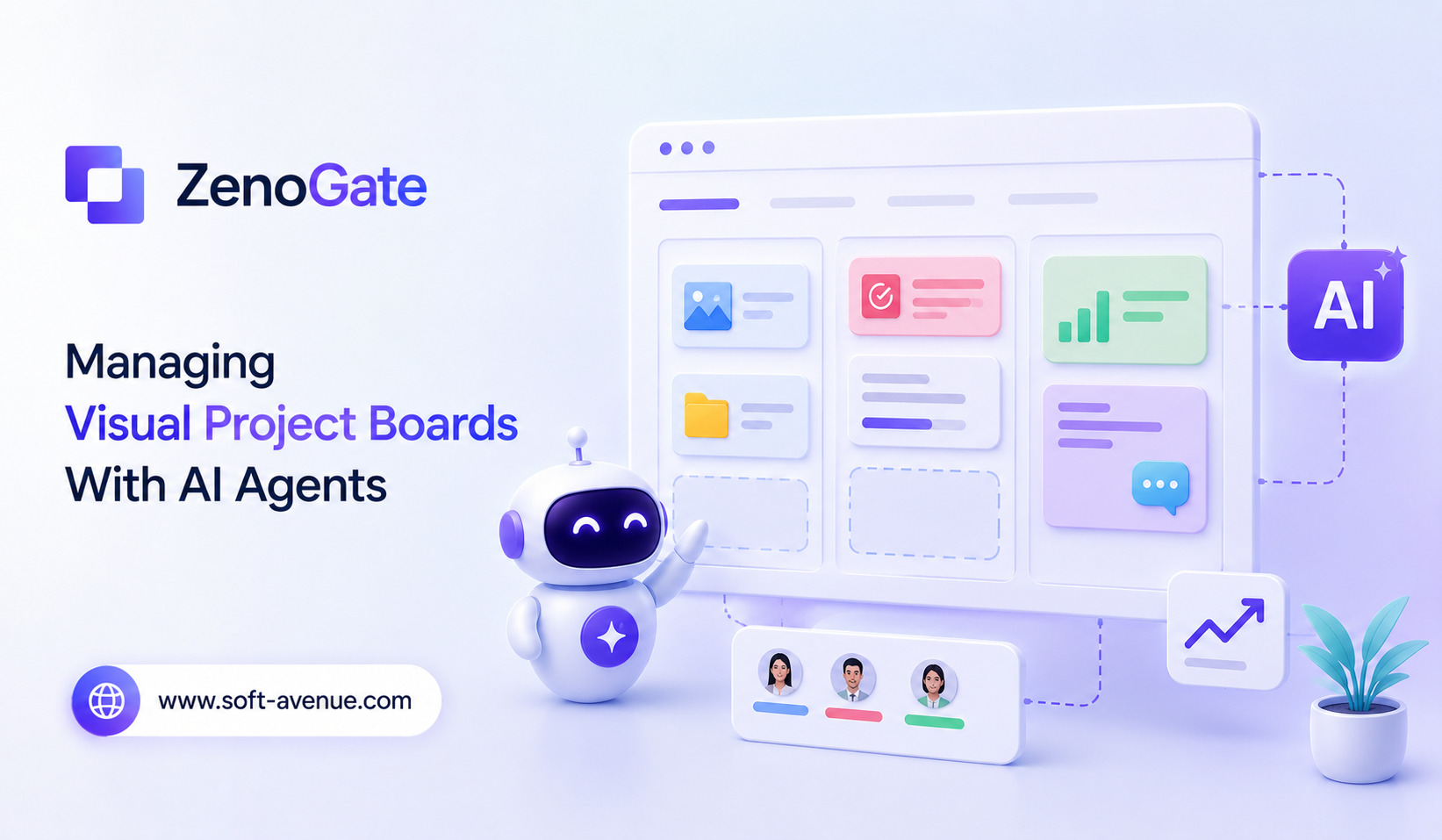
ZenoGate represents this emerging approach to AI-powered project management, where agents can work with visual boards and help automate routine project activities.
What Is ZenoGate?
ZenoGate can be understood as an AI-oriented approach to managing visual project boards.
Traditional project boards provide a visual representation of work. Tasks can be placed into columns representing stages such as “To Do,” “In Progress,” “Review,” and “Completed.”
This makes project status easy to understand at a glance.
The challenge is maintaining that board.
As projects become more complicated, team members may spend time updating cards, changing deadlines, assigning tasks, and checking progress.
An AI agent can potentially assist with these activities by interpreting instructions and taking actions within the project workspace.
How AI Agents Change Project Boards
A normal project board is largely a passive workspace.
People interact with it manually.
An AI-powered board can become more dynamic.
Instead of dragging individual cards or opening several menus, a team member could potentially give an instruction such as:
“Move the completed design tasks to review and assign the remaining development tasks to the engineering team.”
An AI agent could interpret the request and perform the relevant actions, depending on the permissions and integrations available.
This changes the relationship between users and project management software.
The board remains the visual interface, while the AI agent becomes an operational assistant working behind it.
Managing Tasks With Natural Language
One of the most useful applications of AI agents is natural-language task management.
Users do not always want to interact with multiple menus and settings.
They may simply want to describe what needs to happen.
For example, a project manager might ask an AI agent to create tasks for a new marketing campaign, organize them by priority, and add appropriate deadlines.
Instead of manually creating every card, the agent could potentially translate the request into structured project information.
This can make project management more accessible, particularly for people who are not highly familiar with complex productivity software.
Organizing Visual Workflows
Visual boards are popular because they make workflows easier to understand.
A team can quickly see which tasks are waiting, which are active, and which have been completed.
AI agents can potentially help keep this structure organized.
For example, an agent could identify tasks that have been completed but remain in an active column.
It could also potentially flag overdue tasks, identify cards without owners, or organize work according to predefined project rules.
This can reduce the administrative work involved in maintaining a clean project board.
Automating Repetitive Project Management
Project managers often spend significant time performing repetitive activities.
These can include:
- Updating task statuses
- Assigning responsibilities
- Checking deadlines
- Creating recurring tasks
- Moving cards between workflow stages
- Identifying overdue work
None of these tasks necessarily requires complex strategic thinking.
AI agents can potentially automate some of them.
The advantage is cumulative. Saving a few minutes on one task may not seem significant, but doing so across hundreds of project updates can create substantial time savings.
AI Agents for Project Planning
AI can also assist before work begins.
Project planning often involves breaking a large goal into smaller tasks.
For example, launching a new website may require research, design, content creation, development, testing, SEO, and publishing.
An AI agent could potentially transform a high-level project description into a structured collection of tasks.
Those tasks could then be organized on a visual board.
Human team members can review the proposed structure and make adjustments before work starts.
This creates a collaborative relationship between AI planning and human decision-making.
Keeping Teams Updated
Communication is another important part of project management.
When team members work across different locations or schedules, keeping everyone informed can be difficult.
An AI agent can potentially monitor project activity and provide summaries.
For example, a manager could ask:
“What changed on the project this week?”
The system could potentially summarize completed tasks, delayed work, newly created tasks, and items requiring attention.
This can be more efficient than reviewing every card individually.
Identifying Project Bottlenecks
Visual boards can reveal bottlenecks, but people still need to notice them.
If many tasks remain stuck in the same stage, there may be a problem.
An AI agent could potentially analyze board activity and highlight unusual patterns.
For example, it might identify that several tasks have remained in review for longer than expected.
This information can help project managers investigate the cause.
The AI does not necessarily need to make the final decision. Its role can simply be to bring important information to the team’s attention.
AI Agents and Team Collaboration
AI-powered project boards can also support collaboration between departments.
Marketing, design, sales, development, and operations teams often have different responsibilities within the same project.
An AI agent can potentially help coordinate tasks between these groups.
For example, when a design task is marked complete, an automated workflow could create a review task for marketing.
After approval, the next stage could be assigned to another team.
This type of workflow reduces the need for employees to manually coordinate every transition.
Managing Deadlines
Deadlines are critical in project management.
Missing one task can sometimes delay an entire workflow.
AI agents can potentially monitor deadlines and identify tasks that require attention.
Instead of waiting for a project manager to discover that several tasks are approaching their due dates, the system could proactively highlight them.
An agent might also help reorganize work when deadlines change, although important scheduling decisions should generally remain under human control.
Personal Productivity
AI-managed visual boards are not limited to large teams.
Individuals can use project boards to manage personal work.
Freelancers, creators, students, entrepreneurs, and consultants often have multiple responsibilities competing for attention.
An AI agent could potentially help organize these tasks.
For example, a user might ask the agent to identify the most urgent tasks, group similar activities, and create a realistic plan for the day.
The visual board then becomes a shared space between the user and the AI assistant.
Benefits for Small Businesses
Small businesses can particularly benefit from AI-assisted project management.
A small team may not have a dedicated project manager.
Instead, employees may divide coordination responsibilities among themselves.
An AI agent can potentially take care of some administrative activities, allowing employees to focus on actual project work.
This can be useful for marketing campaigns, website development, client projects, product launches, and internal operations.
Human Oversight Still Matters
AI agents should not be given unlimited control over project management systems.
An incorrect automated action could change deadlines, assign work to the wrong employee, or move an important task into the wrong workflow stage.
Human oversight is therefore important.
Low-risk activities, such as generating summaries or identifying overdue tasks, can often be automated more easily.
Actions that affect budgets, client commitments, major deadlines, or employee responsibilities may require confirmation.
A good AI project management system should make it clear what the agent changed and allow users to review important actions.
Security and Permissions
AI agents interacting with project boards may have access to sensitive business information.
Project boards can contain client information, product plans, internal discussions, documents, deadlines, and other confidential data.
Organizations should therefore use appropriate permissions.
An agent should only access the projects and actions necessary for its role.
Activity logs can also help teams understand how an AI agent interacted with the workspace.
These safeguards become increasingly important as AI agents move from providing suggestions to taking real actions.
Challenges of AI-Powered Project Boards
AI project management is not without limitations.
AI agents may misunderstand natural-language instructions or make incorrect assumptions about task relationships.
Projects can also contain exceptions that are difficult to capture through simple automation rules.
For this reason, AI should support project managers rather than completely replace them.
The best results are likely to come from combining automation with clear workflows and human review.
Teams should begin with repetitive, well-defined activities before allowing agents to handle more complex project decisions.
The Future of Visual Project Management
Project management software is likely to become increasingly conversational and automated.
Instead of manually interacting with every task card, users may increasingly communicate with project systems through natural language.
A project manager could ask an AI agent to explain delays, reorganize tasks, prepare a status report, or identify the biggest risks.
The visual board would continue to provide transparency, while the AI agent would help manage the underlying workflow.
This combination could make project management both more interactive and more automated.
Final Thoughts
ZenoGate represents the growing idea of combining AI agents with visual project management.
Visual boards make work easy to understand, while AI agents can potentially reduce the manual effort required to maintain them.
From creating tasks and organizing workflows to monitoring deadlines, summarizing progress, and identifying bottlenecks, AI can become an active participant in project operations.
However, automation should be introduced carefully. Permissions, security, human approval, and clear workflow rules are essential when an AI agent can modify project information.
The future of project management may not be about choosing between humans and AI. Instead, it could involve humans making important decisions while AI agents handle the repetitive coordination work that keeps projects moving.
