
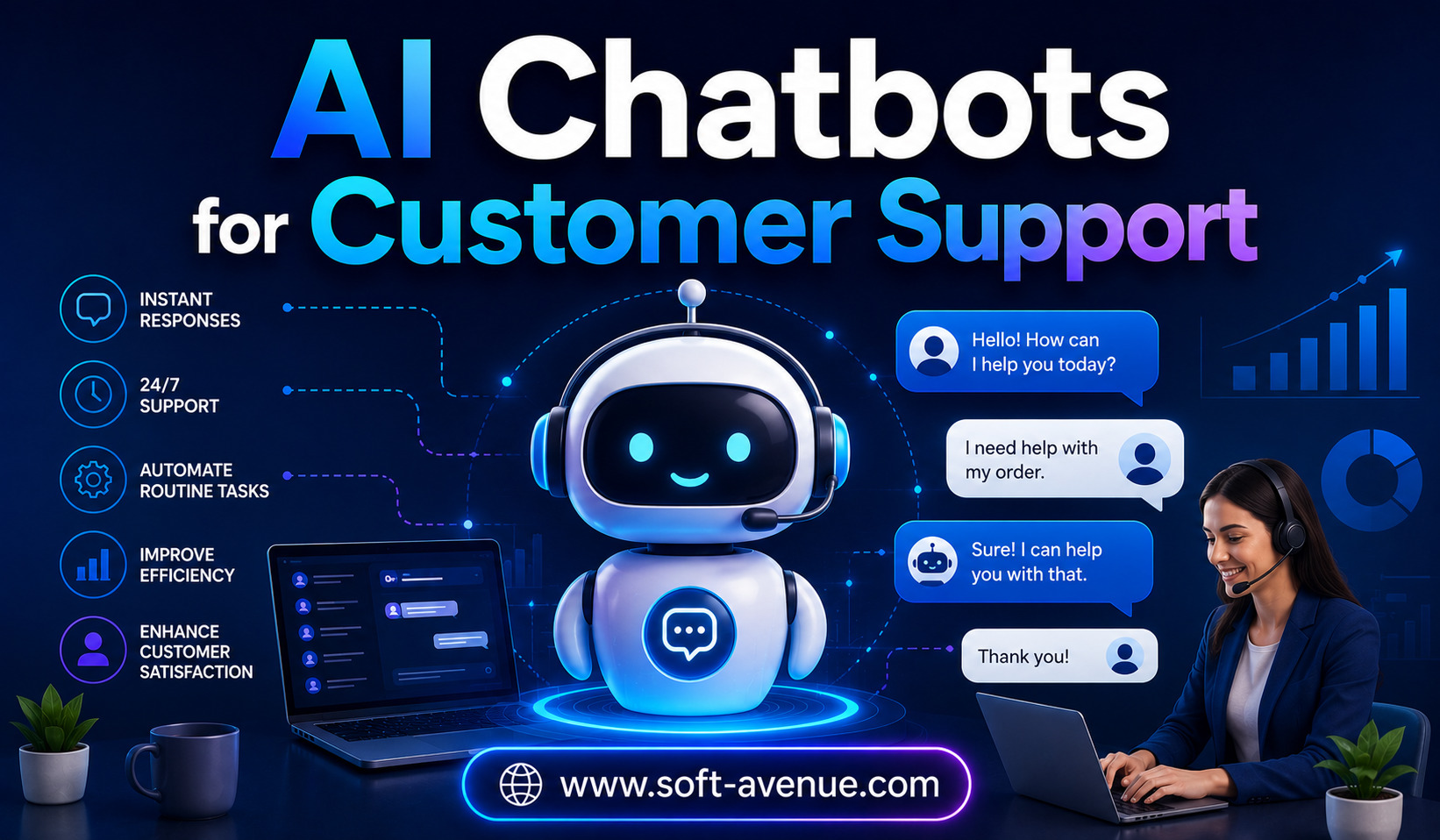
Customer service has always been one of the most important factors influencing a company’s success. While businesses once competed primarily on product quality and pricing, today’s customers expect something more—fast, personalized, and always-available support. In an increasingly digital world, waiting on hold for several minutes or waiting days for an email response has become frustrating for consumers who expect instant solutions.
This shift in customer expectations has accelerated the adoption of artificial intelligence across customer support operations. In 2026, AI chatbots are no longer viewed as simple automated response systems. They have evolved into intelligent virtual assistants capable of understanding conversations, solving problems, guiding customers through complex processes, and working alongside human support teams.
From small online stores to multinational corporations, organizations across every industry are investing in conversational AI to improve customer satisfaction while reducing operational costs. What was once considered an emerging technology has now become an essential business tool that is reshaping the future of customer experience.
Why Customer Support Is Changing
The digital economy has fundamentally changed the way customers interact with businesses. Consumers now communicate through websites, mobile apps, messaging platforms, and social media rather than relying solely on traditional phone support. They expect companies to respond immediately regardless of time zones, weekends, or holidays.
Meeting these expectations with only human support agents has become increasingly difficult. As businesses grow, customer inquiries increase proportionally, requiring larger support teams, additional training, and higher operational expenses. Seasonal sales, marketing campaigns, and product launches can create sudden spikes in support requests that are difficult to manage efficiently.
AI chatbots address these challenges by providing immediate assistance around the clock. Instead of replacing customer support representatives, they automate repetitive conversations and enable human agents to focus on situations requiring critical thinking, empathy, or specialized expertise.
This collaborative approach has become one of the primary reasons organizations continue investing heavily in conversational AI.
The Evolution of AI Chatbots
The first generation of customer service chatbots was relatively limited. These systems followed predefined scripts and responded only when users entered specific keywords or phrases. Any unexpected question often resulted in confusing or irrelevant answers, leading many customers to avoid chatbot interactions altogether.
Today’s AI chatbots are significantly more sophisticated. Advances in Natural Language Processing (NLP), machine learning, and large language models have transformed them into intelligent conversational assistants capable of understanding context, recognizing customer intent, and generating responses that closely resemble human conversations.
Rather than simply matching keywords, modern AI chatbots interpret meaning. They can maintain context throughout an extended conversation, remember previous interactions, identify customer preferences, and provide increasingly personalized recommendations. These capabilities have dramatically improved both customer satisfaction and trust in AI-powered support systems.
Why Businesses Are Investing in Conversational AI
Organizations no longer view customer support solely as a cost center. Instead, it has become a strategic opportunity to build customer loyalty, improve retention, and strengthen brand reputation.
AI chatbots enable businesses to respond instantly to customer inquiries without requiring additional staffing during busy periods. This not only reduces operational costs but also improves response times and ensures customers receive consistent information regardless of when they contact the company.
Another major advantage is scalability. Unlike traditional support teams that can handle only a limited number of conversations simultaneously, AI chatbots can assist thousands of customers at the same time without compromising response quality. This capability becomes especially valuable during major shopping events, promotional campaigns, and product launches.
The financial benefits are equally compelling. By automating frequently asked questions, order tracking, appointment scheduling, account updates, and basic troubleshooting, organizations reduce repetitive workloads while allowing support professionals to dedicate more time to complex customer issues.
Creating Personalized Customer Experiences
One of the most significant developments in conversational AI is personalization. Modern customers expect businesses to remember previous interactions and understand their individual needs without repeatedly asking for the same information.
AI chatbots can integrate with customer relationship management (CRM) platforms, purchase histories, subscription details, and support records to create more meaningful conversations. Instead of providing generic responses, they can recognize returning customers, reference previous interactions, recommend relevant products, and proactively offer assistance based on customer behavior.
This personalized approach creates smoother customer journeys while strengthening long-term relationships between businesses and their customers.
AI and Human Support: A Partnership Rather Than a Replacement
One of the biggest misconceptions surrounding AI chatbots is that they will completely replace human customer service representatives. In reality, the most successful organizations combine artificial intelligence with human expertise rather than choosing one over the other.
Routine questions such as delivery updates, account information, refund policies, password resets, appointment scheduling, and product availability can usually be resolved instantly by AI chatbots. However, situations involving complaints, emotional concerns, technical troubleshooting, or complex financial decisions often require empathy and judgment that only experienced human representatives can provide.
Modern customer support strategies therefore focus on intelligent collaboration. AI handles repetitive and predictable conversations while smoothly transferring complicated cases to human agents with the complete conversation history already available. This significantly reduces customer frustration because users do not need to explain their issue multiple times.
Instead of replacing employees, AI is making customer support teams more productive and allowing them to deliver higher-quality service.
Where AI Chatbots Are Making the Biggest Impact
The adoption of AI chatbots has expanded rapidly across industries because nearly every business interacts with customers through digital channels.
E-commerce companies use conversational AI to answer product questions, provide shipping updates, recommend items, process returns, and recover abandoned shopping carts. Banks employ AI assistants to help customers manage accounts, explain financial products, and answer frequently asked questions while maintaining security.
Healthcare organizations use chatbots to schedule appointments, provide medication reminders, answer common patient inquiries, and guide users toward appropriate healthcare resources. Many educational institutions now use AI assistants to make admissions, course selection, exam schedules, and student support faster and easier.
Travel agencies, insurance providers, telecommunications companies, hospitality businesses, and government organizations have also embraced conversational AI as part of their customer service strategies. As AI technology continues to mature, new applications continue emerging across virtually every sector.
Key Advantages of AI Chatbots
The growing popularity of conversational AI is driven by several measurable business benefits.
Among the most significant advantages are:
- Faster customer response times and 24/7 availability
- Reduced operational costs and improved support efficiency
- Consistent service quality across every customer interaction
- Better scalability during high-demand periods
These advantages explain why conversational AI has become a long-term investment rather than a short-term technology trend.
Traditional Customer Support vs AI Chatbots
| Feature | Traditional Support | AI Chatbots |
| Availability | Limited business hours | Available 24/7 |
| Response Time | Minutes or hours | Instant responses |
| Scalability | Limited by staff size | Handles thousands of conversations simultaneously |
| Operating Cost | Higher | Lower |
| Personalization | Depends on agent knowledge | Uses customer data for personalized interactions |
| Consistency | May vary between agents | Consistent responses across conversations |
Challenges Businesses Must Address
Although AI chatbots continue to improve, successful implementation requires careful planning and ongoing optimization. Businesses cannot simply deploy a chatbot and expect immediate success.
Poorly trained AI systems may misunderstand customer intent or provide inaccurate responses if their knowledge base is outdated. Organizations must continuously monitor chatbot performance, update information regularly, and ensure seamless transitions to human representatives whenever conversations become too complex.
Privacy and data protection also remain important considerations. As AI chatbots increasingly access customer information, businesses must implement strong security measures and comply with applicable data protection regulations to maintain customer trust.
Companies that invest in both technology and responsible AI governance are achieving the strongest customer satisfaction results.
Final Thoughts
AI chatbots have become one of the most important technologies transforming customer support in 2026. Their ability to provide instant responses, deliver personalized experiences, reduce operational costs, and improve business efficiency has made them an essential component of modern customer service strategies.
However, the greatest success comes from combining AI with human expertise rather than treating automation as a complete replacement. Businesses that balance intelligent technology with genuine human empathy are creating customer experiences that are faster, more consistent, and significantly more satisfying.
As conversational AI continues to evolve, organizations that embrace these innovations responsibly will be better positioned to meet growing customer expectations and maintain a competitive advantage in an increasingly digital marketplace.
Frequently Asked Questions
What is an AI chatbot for customer support?
An AI chatbot is a virtual assistant powered by artificial intelligence that communicates with customers, answers questions, resolves common issues, and provides support through websites, mobile apps, and messaging platforms.
How do AI chatbots improve customer service?
AI chatbots improve customer service by providing instant responses, operating 24/7, reducing waiting times, personalizing conversations, and allowing human agents to focus on more complex customer issues.
Which industries use AI chatbots the most?
Industries such as e-commerce, banking, healthcare, education, travel, insurance, telecommunications, and hospitality are among the largest adopters of AI-powered customer support.
Will AI chatbots replace customer service agents?
No. AI chatbots are designed to automate repetitive tasks and enhance productivity. Human agents remain essential for handling sensitive, emotional, and complex customer interactions.
Why are AI chatbots important in 2026?
Businesses are adopting AI chatbots because they improve efficiency, reduce support costs, increase customer satisfaction, and enable organizations to provide faster and more personalized service around the clock.
