Building a website used to require a combination of design skills, coding knowledge, content planning, hosting setup, and technical maintenance. Even a relatively simple business website could take considerable time to plan and launch.
AI is changing that process.
Today, AI website builders can transform natural-language descriptions into website concepts, layouts, content, and sometimes complete working sites. Instead of starting with a blank editor or writing code from scratch, users can explain what they want in ordinary language.
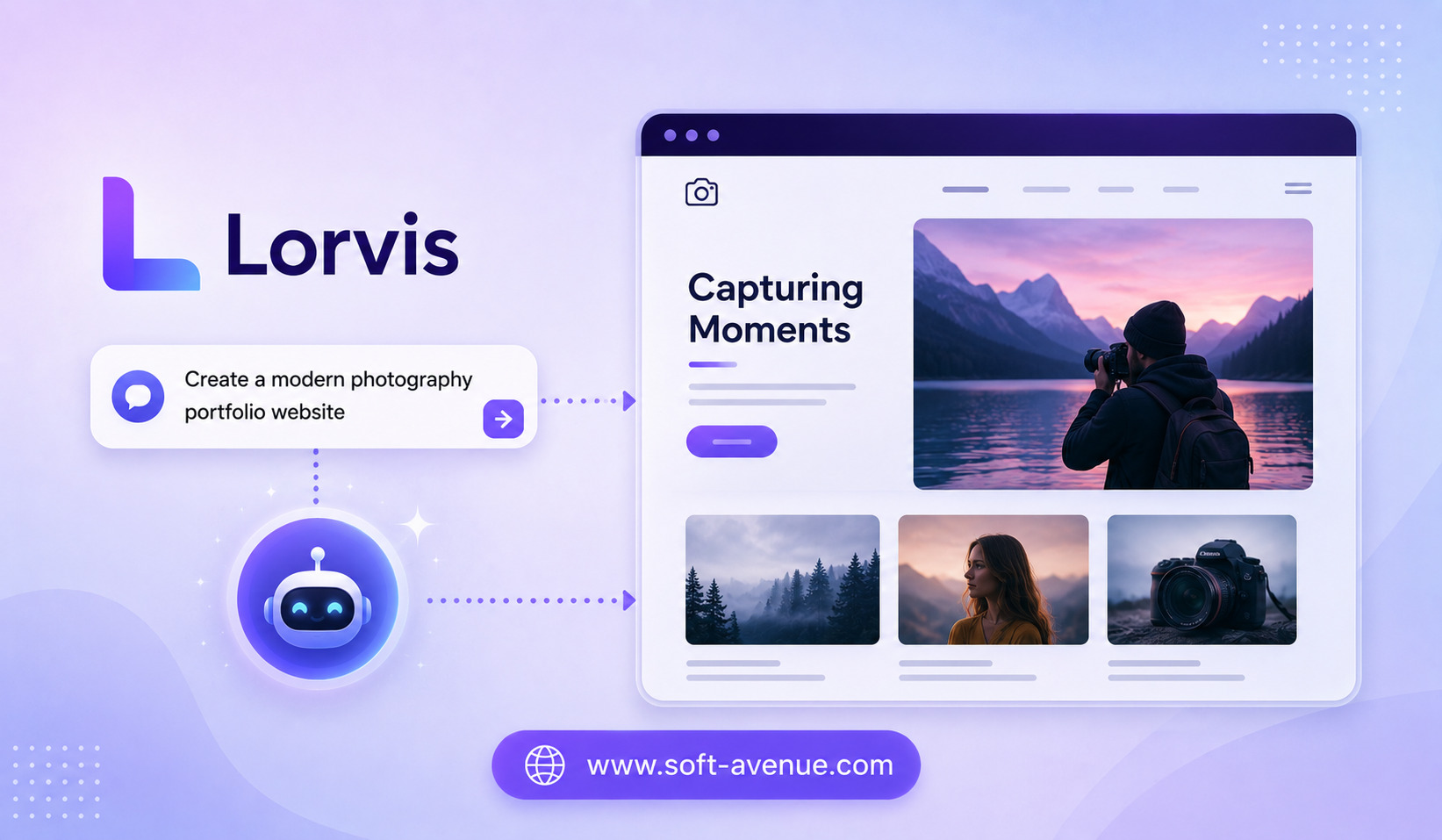
Lorvis represents this emerging approach to website creation, where a simple sentence can become the starting point for an AI-generated website.
The idea is particularly appealing to entrepreneurs, freelancers, creators, small businesses, and people who have a website idea but do not have extensive technical skills.
What Is Lorvis?
Lorvis can be understood as an AI-powered website creation concept focused on turning a natural-language idea into a website.
The traditional website-building process often begins with questions about structure and design. Users need to decide what pages they need, how the homepage should look, what content belongs on each section, and how everything should be connected.
An AI website builder can simplify the initial process.
Instead of manually constructing every element, a user can describe the website they want. The AI can interpret the description and use it as a foundation for generating the site’s structure and appearance.
This makes the starting point much simpler: describe the idea first, then refine the website.
How AI Website Generation Works
The concept behind AI website generation is based on natural-language instructions.
A user might describe a business, explain its target audience, mention the services it offers, and provide a preferred visual direction.
For example, someone could write a sentence describing a modern website for a local fitness studio with information about classes, trainers, schedules, and contact details.
Instead of translating that idea into technical requirements manually, an AI system can interpret the description and generate a website concept.
The user can then review the result and make changes.
This approach turns website creation into more of a conversation than a traditional design-and-development process.
From One Sentence to a Website
The biggest attraction of tools like Lorvis is the simplicity of the starting point.
A traditional website project may begin with wireframes, design mockups, content documents, technical specifications, and development work.
An AI-first workflow can begin with one sentence.
The sentence does not have to contain every detail. It can communicate the basic purpose of the website and the desired style.
The AI can use that information to create an initial version.
The user can then provide additional instructions such as changing the colors, adding a section, rewriting content, modifying the layout, or making the design more suitable for mobile devices.
This iterative approach can make experimentation much faster.
Why Natural-Language Website Building Matters
Natural language is much easier for most people than programming languages.
A business owner may know exactly what they want their website to communicate without knowing HTML, CSS, JavaScript, or modern web frameworks.
AI can act as a bridge between the business idea and the technical implementation.
Instead of learning how websites are constructed before launching a project, users can focus first on describing their goals.
This does not eliminate the need for quality control, but it lowers the barrier to getting a first version online.
Benefits for Small Businesses
Small businesses are among the groups that can benefit most from AI website builders.
A new business may need a website quickly but may not have the budget for a professional development team.
An AI-powered workflow can help create an initial site that includes essential information such as services, company details, contact information, and calls to action.
For a small business, getting a functional starting point can be more valuable than spending weeks building every component from scratch.
The website can then be refined as the business grows.
Useful for Entrepreneurs and Startups
Startups frequently need to test ideas quickly.
Before investing heavily in a product, a founder may want a landing page explaining the concept and collecting interest from potential customers.
AI website generation can help create these early versions more quickly.
A founder can describe the product, target audience, key benefits, and desired style. The AI can then create a starting point that can be used for testing.
This can support faster experimentation and reduce the time between having an idea and presenting it to the public.
AI Website Builders for Creators
Creators also need websites for portfolios, personal brands, newsletters, projects, and online services.
The challenge is that creators often want a distinctive visual identity but may not want to spend most of their time learning web development.
An AI website tool can help with the initial structure and design.
A photographer, writer, designer, consultant, or content creator can describe their work and ask for a website that reflects their style.
The creator can then focus on editing the content and making the final site feel personal.
Website Design Becomes More Conversational
One of the biggest changes introduced by AI website builders is the move toward conversational design.
Traditional website builders usually present users with menus, templates, drag-and-drop elements, and configuration settings.
These interfaces provide flexibility, but they can also overwhelm beginners.
AI introduces another possibility.
Instead of searching through menus to find a particular option, users can explain what they want in plain language.
For example, they could ask the system to make the homepage more minimal, add a testimonials section, simplify the navigation, or create a stronger call-to-action area.
The AI can interpret those instructions and make the corresponding changes where supported.
AI Does Not Replace Good Website Strategy
Although AI can simplify website creation, technology alone does not guarantee a successful website.
A website still needs a clear purpose.
Businesses need to understand who their customers are, what information visitors need, and what action they want people to take.
A visually attractive website with unclear messaging may perform poorly.
Users should therefore treat AI-generated websites as starting points rather than automatically finished products.
Human decisions remain important for branding, messaging, customer experience, and business strategy.
SEO Still Matters
Creating a website is only one part of building an online presence.
Search engine optimization remains important for businesses that want organic traffic.
AI can help generate initial page structures and content, but users still need to pay attention to search intent, useful information, page titles, headings, internal linking, image optimization, technical performance, and other SEO factors.
Automatically generated content should also be reviewed for accuracy, originality, and usefulness.
The goal should be to create a website that genuinely helps visitors rather than simply producing pages for search engines.
Mobile-Friendly Design Is Essential
A modern website needs to work well across different screen sizes.
Many visitors access websites through smartphones, so mobile usability should be considered from the beginning.
An AI website builder can potentially generate responsive layouts, but users should still test important pages on phones and tablets.
Buttons should be easy to tap, text should remain readable, navigation should be clear, and important information should not be hidden behind complicated layouts.
A website that looks impressive on a desktop but performs poorly on mobile can lose potential customers.
The Role of Human Editing
AI can accelerate website creation, but human editing remains essential.
Generated text may sound generic. Images may not accurately represent a business. Some sections may contain unnecessary information or fail to reflect the company’s personality.
Reviewing every important page helps ensure that the final website feels authentic.
Businesses should verify contact details, product information, pricing, claims, policies, and other important information before publishing.
The best results often come from combining AI speed with human judgment.
Potential Challenges of AI Website Creation
AI website generation has limitations.
The first challenge is uniqueness. If many users rely on similar prompts and templates, websites can begin to look alike.
Another issue is technical control. Advanced developers may want precise control over the underlying code and architecture that simplified AI builders do not always provide.
There can also be limitations around integrations, performance optimization, accessibility, and advanced functionality.
For simple websites, these limitations may not matter much. For complex applications, professional development may still be necessary.
The Future of AI Website Builders
The concept behind tools like Lorvis points toward a broader change in web development.
In the future, creating a website may increasingly begin with a conversation.
A user could explain an idea, provide examples, answer a few questions, and receive a working website that can be continuously refined through natural-language instructions.
This could make web development more accessible to people who previously depended entirely on developers.
At the same time, professional developers are unlikely to disappear. Instead, their role may shift toward solving more complex problems, reviewing AI-generated implementations, building custom functionality, and ensuring reliability and security.
Final Thoughts
Lorvis represents the growing idea that creating a website can start with a simple sentence rather than a blank coding environment.
By using AI to interpret natural-language instructions, website creation can become more accessible to entrepreneurs, small businesses, creators, and non-technical users.
The biggest advantage is speed. An idea can become a website concept quickly, giving users something concrete to review and improve.
However, AI-generated websites still require human involvement. Branding, content quality, SEO, accessibility, security, mobile usability, and business strategy all need careful attention.
The future of website creation is likely to combine AI automation with human creativity. Tools such as Lorvis show how that future could make the distance between having an idea and building a website significantly shorter.
