Marketing has become increasingly personalized. Customers expect brands to understand their needs, challenges, industries, and buying preferences rather than receiving the same message as everyone else.
For businesses selling products or services to multiple types of customers, this creates a challenge. A marketing message that works well for a startup founder may not appeal to an enterprise technology leader. Similarly, a sales pitch designed for a marketing manager may not be relevant to a finance executive.
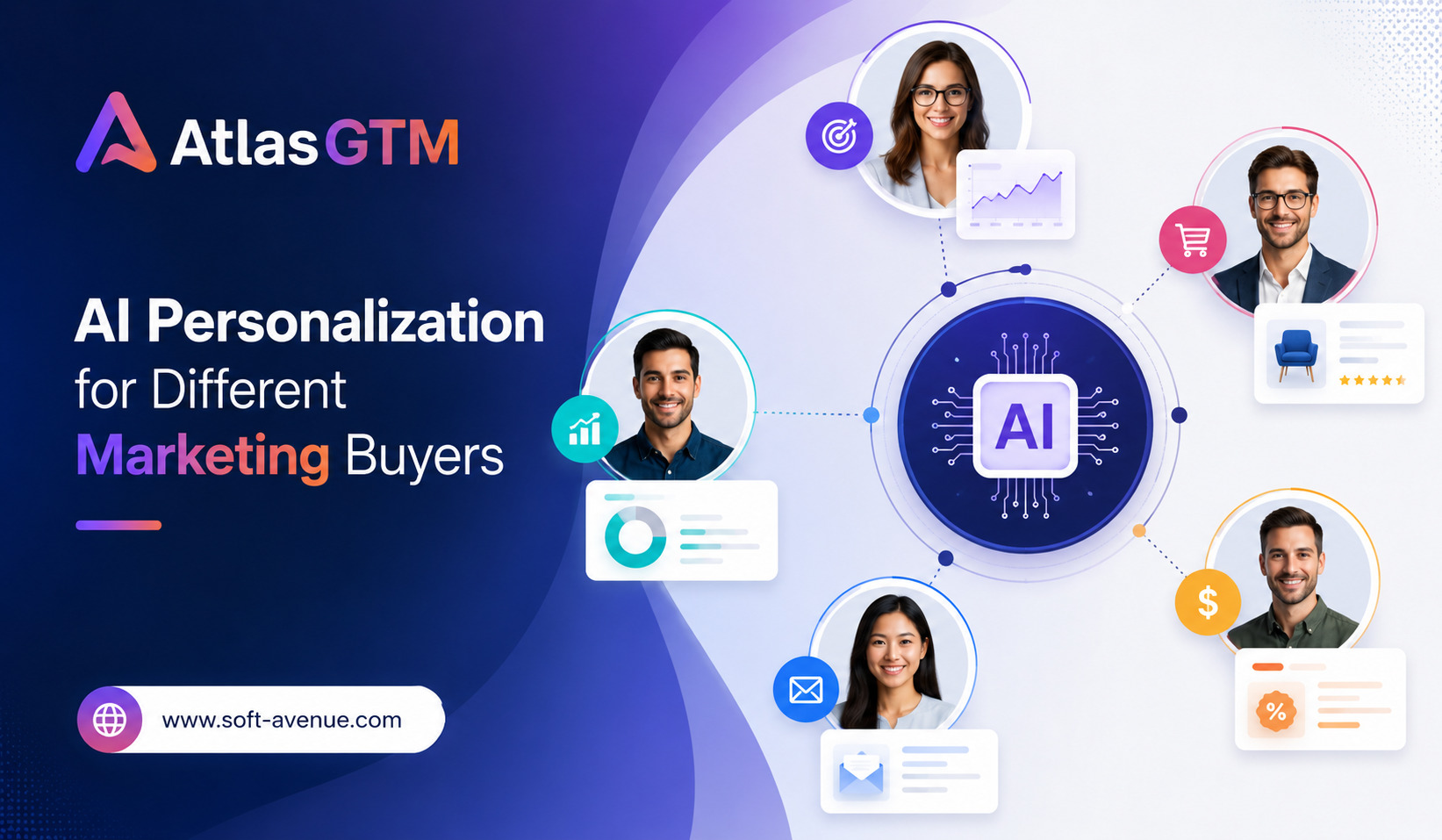
AtlasGTM represents the growing use of artificial intelligence to personalize marketing experiences for different buyers. By using AI to understand audiences and adapt messaging, businesses can potentially create more relevant interactions throughout the customer journey.
This approach is especially useful for companies with multiple buyer personas, industries, use cases, or customer segments.
What Is AtlasGTM?
AtlasGTM can be understood as an AI-driven approach to go-to-market personalization.
GTM, or go-to-market strategy, covers how a company reaches potential customers, communicates its value, generates demand, and converts prospects into customers.
Traditional marketing campaigns often rely on broad audience segments. A company might create one campaign for small businesses, another for enterprises, and another for a particular industry.
AI can take this idea further by helping marketers personalize content and messaging at a more detailed level.
Instead of simply identifying what type of customer a person is, AI can potentially analyze available information and determine which messages, benefits, and use cases are most relevant to that buyer.
Why Buyer Personalization Matters
Different buyers have different priorities.
A company’s chief financial officer may care about cost savings, predictable expenses, and return on investment. A technology leader may be more interested in integrations, security, scalability, and technical performance.
A sales manager might care about productivity and lead conversion.
If every person receives the same marketing message, some of these concerns may not be addressed.
Personalization attempts to solve this problem by making communication more relevant to the individual or account.
The objective is not simply to add someone’s name to an email. Effective personalization should change the substance of the message based on what matters to the buyer.
Moving Beyond Basic Personalization
Marketing personalization has traditionally included simple techniques such as adding a customer’s name to an email or recommending products based on previous activity.
AI enables more sophisticated approaches.
An AI system can potentially consider multiple signals, including industry, company size, job role, website behavior, previous interactions, product interests, and other available business information.
These signals can help determine what a particular buyer may care about.
For example, two companies could visit the same product page but have completely different reasons for being interested.
AI-powered personalization can help marketers recognize those differences.
Personalization Across Buyer Personas
Buyer personas are fictional representations of important customer groups.
A software company might have personas such as:
- Startup founders
- Marketing managers
- IT leaders
- Sales executives
- Enterprise decision-makers
Each persona may need different messaging.
A founder may respond to a message about speed and affordability.
An enterprise buyer may want information about security, compliance, scalability, and implementation.
AI can help marketers adapt content according to these different priorities.
Instead of creating completely separate campaigns manually, marketing teams can use AI to assist with producing variations of messaging for different audiences.
AI-Powered Website Personalization
Websites are one of the most important places for personalization.
A visitor arriving at a homepage typically sees the same content as everyone else.
But visitors can have very different needs.
An AI-powered personalization strategy could potentially adapt headlines, product explanations, calls to action, or supporting content according to the visitor’s audience segment.
For example, an enterprise visitor might see messaging focused on scalability and security, while a small business visitor could see information emphasizing simplicity and affordability.
The goal is to make the website immediately relevant without forcing every visitor to search through large amounts of information.
Personalizing Sales Outreach
Sales teams also benefit from personalized communication.
Generic sales emails often receive limited attention because recipients receive large numbers of similar messages.
AI can help sales professionals create more relevant outreach by considering information about a prospect or company.
Instead of sending a standard product pitch, the message can focus on a challenge that is more likely to matter to that buyer.
For example, a marketing leader could receive messaging about campaign efficiency, while an operations executive could receive messaging around workflow improvements.
The salesperson remains responsible for deciding whether the message is appropriate and accurate.
Account-Based Marketing
AI personalization can be particularly valuable for account-based marketing, or ABM.
ABM focuses marketing and sales efforts on specific high-value companies rather than targeting a broad audience.
Each account may have different priorities.
AI can help organize account information and identify possible messaging angles.
A marketing team could potentially create different content for different companies based on industry, business model, technology environment, or strategic priorities.
This can make ABM campaigns more relevant while reducing some of the manual work involved in creating account-specific materials.
Personalization for Different Industries
The same product can solve different problems for different industries.
For example, an AI software company might sell its platform to healthcare organizations, retailers, financial businesses, and technology companies.
The underlying technology may be similar, but the marketing message should reflect the customer’s environment.
Healthcare buyers may care about privacy and compliance.
Retailers may focus on customer experience and operational efficiency.
Technology companies may prioritize integrations and scalability.
AI can help marketers develop industry-specific messaging based on these differences.
AI for Content Creation
Personalization often requires producing more content variations.
This can become difficult for small marketing teams.
AI can help generate initial versions of headlines, emails, landing pages, advertisements, product descriptions, and sales materials.
A marketer could provide the core message and ask AI to adapt it for different audiences.
However, AI-generated content still requires human review.
The objective should be meaningful personalization rather than creating dozens of slightly different versions of generic content.
Personalization and Customer Intent
One of the most valuable signals in marketing is intent.
A potential customer researching a problem is different from someone comparing specific products.
Someone repeatedly visiting pricing pages may have different needs from someone reading educational content.
AI can potentially analyze these behavioral signals and help marketers determine where a buyer is in the purchasing journey.
Early-stage visitors may need educational information, while later-stage prospects may benefit from product comparisons, implementation details, case studies, or pricing information.
This creates the possibility of delivering the right information at the right stage.
Benefits for Marketing Teams
AI personalization can provide several potential advantages.
First, it can help marketing teams scale personalized communication without manually creating every variation.
Second, it can help businesses organize large amounts of customer information.
Third, more relevant messaging can potentially improve engagement.
Finally, AI can help marketing teams experiment with different messages and identify which approaches work best for different audiences.
The real benefit comes from combining personalization with measurable business outcomes.
Personalization Should Not Become Intrusive
There is an important balance between relevance and privacy.
Customers may appreciate useful personalization, but excessive personalization can feel uncomfortable.
Businesses should be transparent about how customer information is collected and used.
They should also follow applicable privacy regulations and provide appropriate controls for users.
Personalization should make an experience more useful, not make customers feel as though they are being watched.
The Importance of Data Quality
AI personalization depends heavily on the information available to the system.
If customer data is inaccurate or outdated, personalization can become counterproductive.
Imagine a company sending a message based on an old job title or incorrect industry classification.
The result could make the business appear less knowledgeable rather than more personalized.
Marketing teams should therefore maintain clean customer and account data.
AI can process information quickly, but it cannot automatically turn inaccurate data into reliable insights.
Measuring AI Personalization
Personalization should be measured rather than assumed to work.
Businesses can track metrics such as website engagement, email response rates, qualified leads, conversion rates, sales velocity, and customer acquisition costs.
A company can compare personalized experiences against more general campaigns to determine whether personalization is producing meaningful improvements.
Testing is particularly important.
Not every personalized message will outperform a simple message.
Data should guide future decisions.
The Future of AI-Driven Marketing
AI personalization is likely to become increasingly sophisticated.
Instead of manually creating fixed buyer personas, marketing systems may continuously analyze customer behavior and adapt messaging dynamically.
Websites, email campaigns, advertisements, sales outreach, and customer communications could potentially become more context-aware.
This could lead to marketing experiences that change according to the customer’s needs rather than forcing every buyer through the same journey.
However, successful implementation will depend on responsible data use, accurate information, strong strategy, and human oversight.
Final Thoughts
AtlasGTM represents the broader shift toward AI-powered personalization in modern marketing.
Different buyers have different goals, challenges, budgets, and decision-making processes. Treating every prospect the same can make marketing less relevant, while personalized communication can help businesses speak more directly to the needs of individual audiences.
AI can support this process by analyzing customer signals, adapting messaging, creating content variations, and helping marketing teams scale personalized campaigns.
But effective personalization is about more than inserting a customer’s name into an email. It requires understanding what matters to the buyer and delivering genuinely useful information.
As businesses collect more customer data and AI becomes more capable of interpreting it, personalized marketing could become a standard part of go-to-market strategy. Companies that combine AI efficiency with human judgment may be better positioned to create marketing experiences that are both scalable and genuinely relevant.
