
Introduction
The real estate industry is becoming more technology-driven, and artificial intelligence (AI) is leading this transformation. Real estate agents are no longer relying only on phone calls, paperwork, and manual marketing to sell properties. Instead, AI tools help them generate leads, create property listings, answer customer questions, analyze market trends, and produce professional marketing content in a fraction of the time.
With buyers expecting faster responses and personalized experiences, AI allows agents to stay competitive while focusing more on building client relationships. From creating virtual property tours to writing listing descriptions, AI is simplifying many everyday tasks and improving productivity.
Why AI Is Important for Real Estate Agents
Real estate professionals often manage multiple responsibilities, including finding new clients, scheduling property visits, negotiating deals, preparing documents, and promoting listings. AI helps automate many of these repetitive tasks, allowing agents to spend more time closing deals.
Some of the biggest advantages include:
- Faster lead generation and follow-up.
- AI-generated property descriptions.
- Market trend and pricing analysis.
- Automated customer support.
- Better social media and email marketing.
Rather than replacing agents, AI works as a digital assistant that improves efficiency and decision-making.
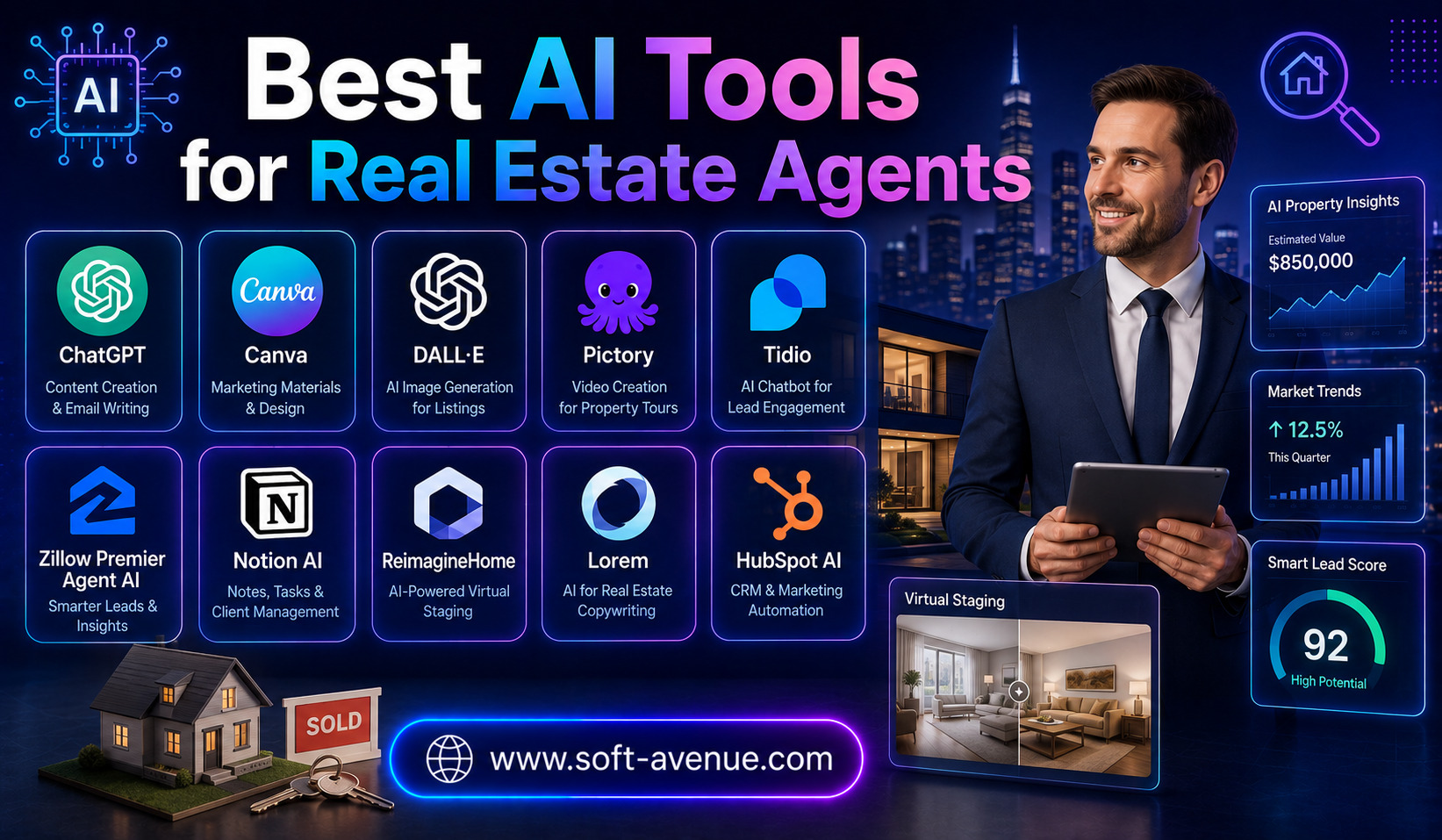
Best AI Tools for Real Estate Agents
Several AI-powered tools are helping agents work smarter and deliver better customer experiences.
| AI Tool | Primary Use | Best For |
| ChatGPT | Content writing and client communication | Property descriptions, emails, blogs |
| Canva AI | Marketing design | Property flyers, social media posts |
| Grammarly | Writing improvement | Professional emails and listings |
| Zillow AI Features | Property insights | Market research and pricing |
| Matterport | 3D virtual tours | Property showcasing |
| Jasper AI | Marketing copy | Ads and promotional campaigns |
Each tool addresses a different aspect of the real estate business, making daily operations faster and more efficient.
How AI Is Changing Property Marketing
Instead of spending hours creating advertisements, writing property descriptions, or designing brochures, agents can generate professional content within minutes.
AI also helps personalize marketing campaigns by analyzing customer preferences. Buyers searching for luxury homes receive different recommendations than first-time homebuyers, increasing the chances of successful conversions.
Another major advantage is multilingual communication. AI translation tools allow agents to connect with international buyers by creating marketing content in multiple languages without hiring translators.
Real-World Applications
Artificial intelligence is already being used across the real estate industry to simplify daily operations and improve the overall customer experience. One of the most common applications is AI-powered chatbots, which can answer property inquiries, schedule viewings, qualify leads, and provide instant responses to potential buyers and renters at any time of the day. This ensures that no customer inquiry goes unanswered, even outside business hours, while allowing agents to focus on high-value tasks such as property showings and negotiations.
Another major use of AI is virtual staging and property visualization. Instead of spending thousands of dollars furnishing an empty home, agents can use AI tools to digitally add realistic furniture, décor, and lighting to listing photos. Buyers can better imagine how a property could look once furnished, making listings more attractive and increasing engagement.
Predictive analytics is also transforming how real estate professionals make decisions. AI analyzes historical sales data, neighborhood trends, local market conditions, buyer preferences, and economic indicators to estimate property values and forecast market movements. These insights help agents recommend competitive pricing, identify investment opportunities, and advise clients on the best time to buy or sell. By combining data-driven insights with professional expertise, AI enables real estate businesses to make smarter decisions, improve marketing strategies, and deliver a more personalized experience for every client.
Challenges of Using AI
While AI offers many benefits, real estate professionals should also understand its limitations before making it a key part of their daily workflow. AI can automate repetitive tasks and analyze large amounts of data quickly, but it cannot replace the human judgment, trust, and personal relationships that play a vital role in buying and selling property. Most buyers and sellers still value working with an experienced real estate agent who understands their needs, knows the local market, negotiates confidently, and provides trusted guidance from start to finish.
Another challenge is the accuracy of AI-generated content. Although AI tools can create property descriptions, estimate prices, and generate marketing materials, the information they provide should always be reviewed before being shared with clients. Incorrect pricing, outdated market data, or inaccurate property details can affect business credibility and lead to poor decision-making. Legal documents, contracts, and compliance-related information should also be carefully verified by qualified professionals, as AI may overlook important legal or regulatory requirements.
Data privacy and security are equally important concerns. Many AI platforms process customer information, financial records, and business data, making it essential for agencies to choose secure software that complies with privacy regulations. Businesses should also ensure that employees understand how customer data is collected, stored, and used to maintain client trust and avoid compliance issues.
Future trends to watch include:
- AI-powered property recommendations based on buyer preferences.
- More accurate market forecasting using predictive analytics.
- Smart virtual assistants for customer support and lead management.
- Interactive virtual property tours with AR and VR technology.
- Automated marketing campaigns, videos, and social media content.
- Greater integration between AI, CRM platforms, and real estate software.
While AI will continue to automate many business processes, it is unlikely to replace the role of experienced real estate professionals. Buying or selling property remains a major financial and emotional decision that requires trust, negotiation skills, and expert guidance. The most successful agents will be those who combine AI-powered technology with personal service, local market expertise, and strong client relationships. By embracing these innovations, real estate businesses will be better prepared to meet changing customer expectations and remain competitive in the years ahead.
Conclusion
Artificial intelligence is changing the way real estate professionals work by making everyday tasks faster and more efficient. From creating property listings and generating marketing content to managing leads, answering customer inquiries, and analyzing market trends, AI helps agents save time while improving productivity. These tools enable businesses to make better decisions, deliver personalized customer experiences, and focus more on building relationships rather than handling repetitive tasks.
As AI continues to evolve, it will become an even more valuable part of the real estate industry. While technology can automate many routine processes, it cannot replace the expertise, negotiation skills, and personal guidance that experienced agents provide. Real estate professionals who combine AI-powered tools with strong customer service will be better positioned to grow their business, stay competitive, and meet the changing expectations of buyers and sellers in the years ahead.
Frequently Asked Questions (FAQs)
1. What is the best AI tool for real estate agents?
There isn’t a single best AI tool, as it depends on your needs. ChatGPT is great for writing property listings, emails, and marketing content, while Matterport is a top choice for creating immersive virtual property tours.
2. Can AI help generate real estate leads?
Yes. AI can analyze customer behavior, automate follow-ups, and improve lead generation through targeted marketing.
3. How does AI improve property marketing?
It helps create listing descriptions, social media posts, email campaigns, virtual staging, and targeted advertisements quickly.
6. Should small real estate agencies use AI?
Absolutely. Many affordable AI tools help small agencies compete with larger firms by improving efficiency and reducing marketing costs.
