A business website is often the first place where potential customers learn about a company. It can influence whether visitors trust a brand, understand its services, contact the business, or move on to a competitor.
Yet building and maintaining a modern website can be challenging. Businesses need attractive design, fast performance, mobile compatibility, useful content, strong security, and a smooth user experience. Older websites may also contain outdated layouts, inefficient code, or technology that no longer matches modern expectations.
Artificial intelligence is changing how businesses approach these challenges.
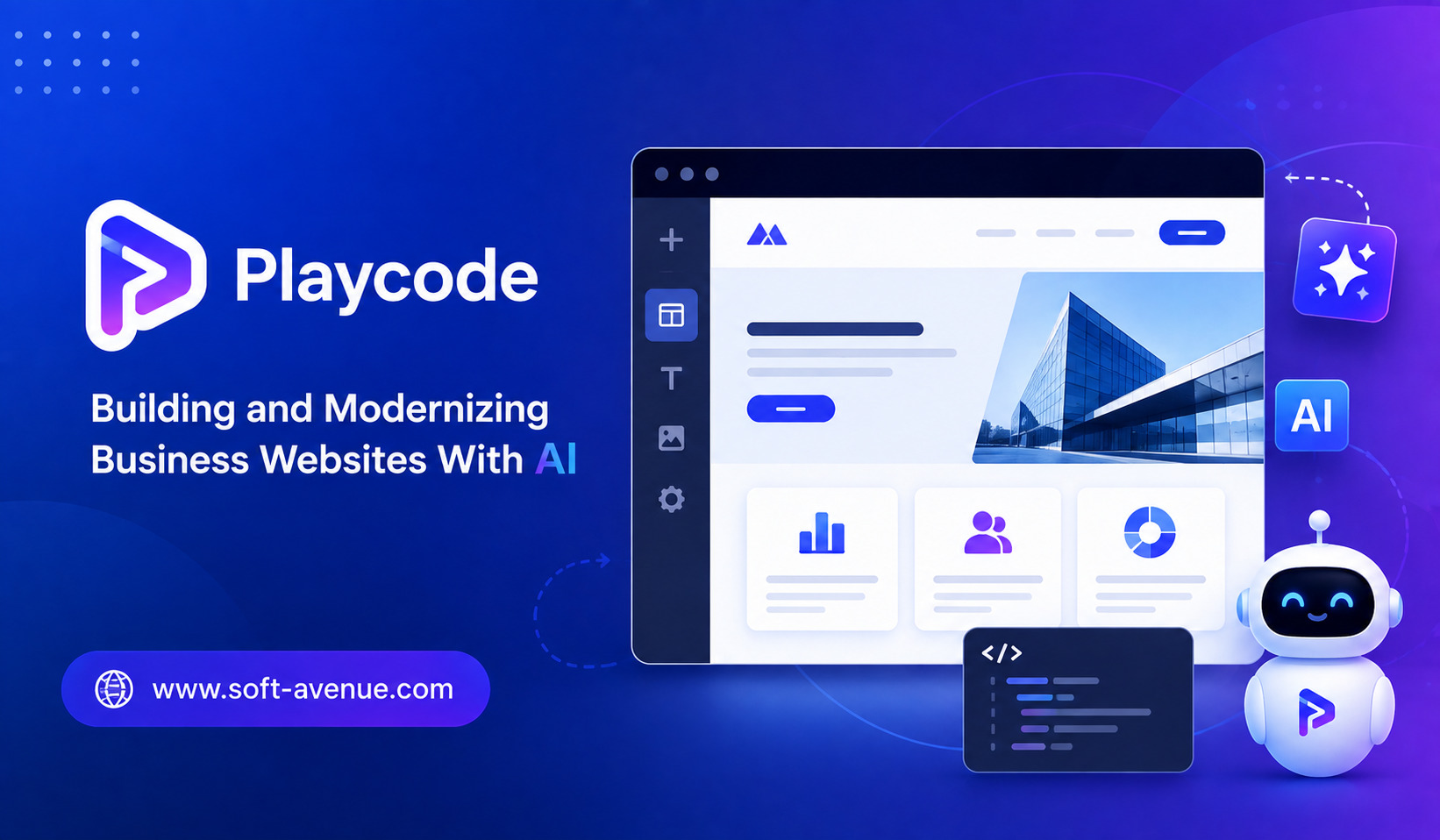
Playcode represents the growing use of AI-assisted development for creating, improving, and modernizing websites. Instead of relying entirely on manual coding, developers and business owners can use AI to speed up parts of the website development process.
This approach can make it easier to move from an idea or outdated website toward a more modern digital presence.
What Is Playcode?
Playcode can be understood in the broader context of AI-assisted web development, where artificial intelligence helps users create or modify websites through natural-language instructions and development tools.
Traditional website development requires developers to manually write and maintain code. Even when using frameworks and templates, changing an existing website can involve significant effort.
AI-assisted development introduces another layer.
A user can describe a desired change, and an AI system can potentially generate or modify the necessary code.
For businesses, this can make website development more accessible and potentially reduce the time required for certain tasks.
Why Businesses Need Modern Websites
A website is no longer simply an online brochure.
Customers increasingly expect websites to load quickly, work properly on smartphones, provide clear information, and make it easy to take action.
An outdated website can create several problems.
It may have difficult navigation, slow-loading pages, poor mobile layouts, outdated branding, or technical limitations.
Even if the business itself has changed significantly, its website may still reflect an older version of the company.
Modernizing the website can therefore become an important part of a broader digital strategy.
How AI Can Help Build Websites
AI can assist with several stages of website development.
The process can begin with a simple description of the website.
A business owner might explain the company’s services, target audience, preferred style, and required pages.
AI can use these instructions to generate an initial structure.
From there, users can request changes such as adding sections, adjusting layouts, improving navigation, or rewriting content.
This makes the development process more iterative.
Instead of designing everything in advance, users can create a version, review it, and continue improving it through additional instructions.
Turning Business Ideas Into Web Pages
One of the most useful aspects of AI-assisted website development is translating business requirements into digital experiences.
Consider a local consulting company that wants a website with a homepage, service pages, client testimonials, an about section, and a contact form.
Traditionally, these requirements would need to be converted into technical specifications before development begins.
With AI-assisted tools, users can describe the requirements in natural language.
AI can help turn those ideas into page structures, content suggestions, interface components, and code.
The human developer can then review and refine the result.
Modernizing an Existing Website
AI is not only useful for building new websites.
Existing websites can also benefit from AI-assisted modernization.
A business may have a website that was created several years ago. The site may still function, but its design could look outdated or its code could be difficult to maintain.
AI can potentially assist developers in identifying areas that need improvement.
For example, developers may use AI to help refactor older code, update components, improve responsive layouts, or convert certain patterns into more modern approaches.
This can make modernization projects more manageable.
Improving Website Design
Design is an important part of a business website.
Visitors should be able to understand the company’s purpose quickly.
AI can help generate design ideas based on a company’s brand and audience.
For example, a technology company may want a clean, modern interface, while a creative agency may prefer a more visual design.
AI can provide starting points for layouts, typography choices, section structures, and interface ideas.
However, human design judgment remains important.
A website should reflect the company’s identity rather than looking like a generic AI-generated template.
AI and Responsive Web Design
Modern websites need to work across different screen sizes.
A page that looks good on a desktop may not work properly on a smartphone.
AI-assisted development can help developers create responsive layouts by generating or modifying CSS and frontend code.
Developers can also ask AI to identify potential mobile-layout problems and suggest improvements.
The resulting website should still be tested manually across different devices and browsers.
AI can accelerate development, but testing remains necessary.
Improving Website Content
Website modernization is not only about code.
Content often becomes outdated as businesses change.
Services may be added, pricing may change, company information may become inaccurate, and old blog posts may no longer reflect the brand.
AI can help rewrite or reorganize website content.
For example, a company could use AI to create an initial version of a service description and then have a human editor adjust it to match the company’s voice.
This can speed up content production while preserving human oversight.
SEO and AI Website Development
Search engine optimization should be considered when building or modernizing a business website.
AI can assist with tasks such as creating page outlines, identifying content gaps, generating title ideas, improving headings, and suggesting internal-link structures.
However, SEO should not become an exercise in producing large amounts of generic AI content.
Search engines and users both benefit from useful, accurate, original information.
Businesses should focus on answering real customer questions and providing clear information about their products or services.
Technical SEO also matters.
Website speed, mobile usability, crawlability, structured information, clean URLs, and accessibility can all influence the quality of a website experience.
AI for Website Code
For developers, AI can act as a coding assistant.
It can generate functions, explain unfamiliar code, suggest improvements, identify possible errors, and help with repetitive development tasks.
This can be particularly useful during website modernization projects.
A developer working with an older codebase may need to understand unfamiliar sections before making changes.
AI can help explain the existing code and propose possible modernization approaches.
The developer remains responsible for testing and approving those changes.
Benefits for Small Businesses
Small businesses often face budget and resource limitations.
Hiring a development team for every small website change may not be practical.
AI-assisted tools can potentially reduce the amount of manual work required for certain tasks.
A small business could use AI to create an initial website, update content, experiment with page designs, or make simple improvements.
This does not mean businesses no longer need professional developers.
Complex functionality, security, integrations, performance optimization, and large-scale migrations still require technical expertise.
But AI can make simpler development tasks faster.
Website Performance Matters
A modern website needs more than an attractive appearance.
Slow pages can frustrate visitors and increase the likelihood that they leave.
AI can help developers analyze code and identify possible performance improvements.
For example, developers may use AI to review unnecessary scripts, inefficient components, large assets, or repeated code.
Performance should still be measured using appropriate testing tools rather than assumed to be improved simply because AI changed the code.
Security Should Not Be Ignored
AI-generated code can contain mistakes.
A website that handles customer information, payments, accounts, or business data requires careful security review.
Developers should inspect AI-generated code for common vulnerabilities and test important functionality before deployment.
Authentication, authorization, form handling, data validation, API connections, and third-party integrations all require particular attention.
AI can assist development, but it should not be treated as a guarantee of secure code.
The Human Role in AI Website Development
The biggest misconception about AI website development is that the technology can completely replace human expertise.
In reality, AI is most useful when paired with clear human direction.
A person still needs to understand the business, define the goals, review the design, verify the content, test the website, and make strategic decisions.
AI can generate possibilities quickly, but humans determine which possibilities are actually useful.
This combination can make development more efficient without sacrificing control.
The Future of Business Website Development
AI-assisted development is likely to become increasingly common.
In the future, business owners may be able to describe website changes in natural language and see those changes implemented almost immediately.
Developers may use AI as a collaborative coding partner throughout the entire development lifecycle.
Website modernization could also become more continuous.
Instead of redesigning a website once every several years, businesses could gradually improve their websites as technology, customer expectations, and business requirements change.
Final Thoughts
Playcode represents the growing role of AI in building and modernizing business websites.
AI-assisted development can help transform ideas into website structures, accelerate coding, improve content, support responsive design, and assist developers with modernization projects.
For small businesses, these capabilities can make website improvements more accessible and reduce the time required for certain tasks. For professional developers, AI can act as a productivity tool that handles repetitive work and helps explore technical solutions.
However, successful website development still depends on human judgment. Businesses need to consider branding, user experience, SEO, performance, accessibility, security, and long-term maintenance.
The future of web development is therefore unlikely to be purely human or purely AI-driven. Instead, it will increasingly combine human strategy and creativity with AI-assisted development, allowing businesses to build and improve digital experiences faster while keeping people in control of the final result.
