
Introduction
Modern businesses rely on fast, secure, and reliable networks to keep daily operations running smoothly. From cloud applications and remote employees to data centers, IoT devices, and hybrid work environments, enterprise networks have become larger and more complex than ever. Even a brief network outage can disrupt business operations, delay customer services, and lead to significant financial losses.
As organizations continue expanding their digital infrastructure in 2026, network monitoring software has become an essential part of enterprise IT. Instead of waiting for users to report connectivity issues, IT teams can monitor network performance in real time, detect problems early, and resolve them before they affect business operations.
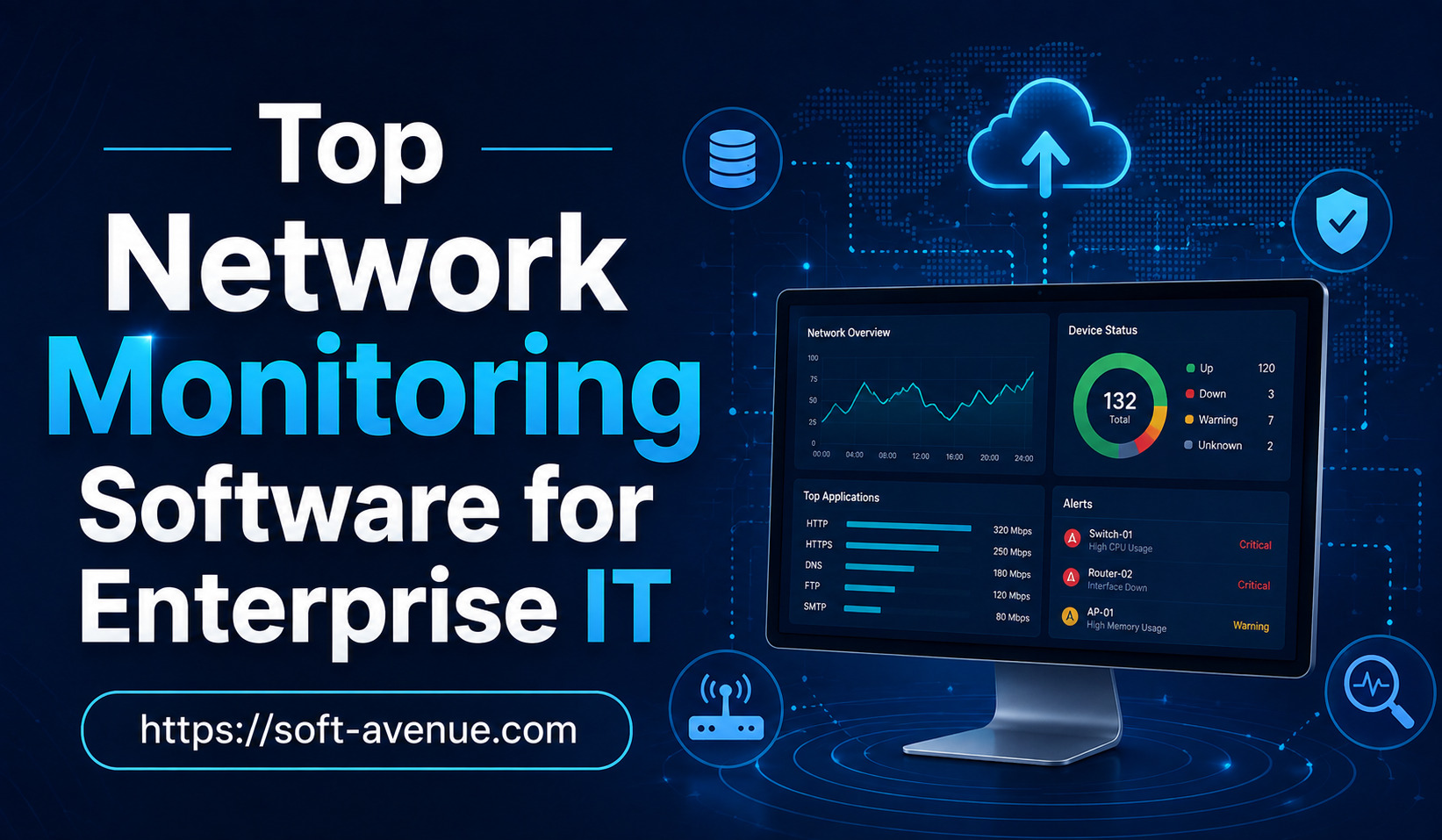
Today’s network monitoring platforms do much more than track uptime. They provide live dashboards, performance analytics, AI-powered alerts, bandwidth monitoring, device health reports, and security insights from a centralized interface. This gives IT administrators complete visibility into their networks and helps them maintain reliable services while reducing downtime.
Why Network Monitoring Is More Important Than Ever
Enterprise networks now connect thousands of devices, cloud services, branch offices, and remote employees. Managing this growing infrastructure manually is no longer practical, especially when businesses depend on uninterrupted access to critical applications.
Network monitoring software continuously tracks routers, switches, firewalls, wireless access points, servers, and connected devices. When unusual activity, performance degradation, or hardware failures occur, administrators receive immediate alerts so they can investigate before the issue escalates.
This proactive approach helps businesses minimize downtime, improve user experiences, and maintain productivity across the organization. It also provides valuable historical data that supports capacity planning and future infrastructure upgrades.
Features That Matter Most
While every network monitoring platform offers different capabilities, several features have become standard requirements for enterprise IT teams.
Important features include:
- Real-time network performance monitoring.
- Automated alerts and intelligent notifications.
- Bandwidth analysis and traffic monitoring.
- Device health and infrastructure visibility.
- AI-powered analytics and reporting.
These capabilities help IT departments detect issues quickly, optimize network performance, and support business continuity.
Several platforms have established themselves as trusted solutions for enterprise network monitoring because of their reliability, scalability, and advanced analytics.
SolarWinds Network Performance Monitor remains one of the most widely used enterprise monitoring solutions. It provides real-time visibility into network devices, application performance, bandwidth usage, and hardware health through customizable dashboards. Its intelligent alerting system helps IT teams identify and resolve issues before they impact users.
ManageEngine OpManager is a comprehensive network monitoring platform that supports physical, virtual, and cloud infrastructure. It offers automated discovery, fault management, performance monitoring, and detailed reporting, making it suitable for organizations managing complex IT environments.
Paessler PRTG Network Monitor is known for its flexibility and easy deployment. It monitors servers, routers, applications, databases, cloud services, and IoT devices using customizable sensors. Businesses appreciate its unified dashboard that provides complete visibility into their infrastructure.
Datadog Network Performance Monitoring has become increasingly popular among cloud-first organizations. It combines network monitoring with infrastructure monitoring, application performance management, and cloud analytics, helping IT teams troubleshoot issues across hybrid environments from a single platform.
Comparison of Leading Network Monitoring Software
| Software | Best For | Key Strength |
| SolarWinds Network Performance Monitor | Enterprise networks | Comprehensive performance monitoring |
| ManageEngine OpManager | Hybrid IT infrastructure | End-to-end network visibility |
| PRTG Network Monitor | Mid-sized and enterprise businesses | Flexible sensor-based monitoring |
| Datadog Network Performance Monitoring | Cloud environments | Unified cloud and infrastructure monitoring |
| Zabbix | Open-source monitoring | Highly customizable monitoring platform |
Each platform offers different strengths, so businesses should evaluate network size, infrastructure complexity, cloud adoption, and monitoring requirements before selecting a solution.
AI Is Changing Network Monitoring
Artificial intelligence is transforming network management by helping IT teams detect issues faster and reduce manual monitoring. Instead of relying only on predefined thresholds, AI analyzes historical performance data to identify unusual patterns and predict potential failures.
Modern monitoring platforms can automatically recognize traffic anomalies, identify devices that may fail, and prioritize alerts based on business impact. This reduces alert fatigue while allowing IT teams to focus on the most critical issues.
AI also improves capacity planning by forecasting future network usage, helping organizations upgrade infrastructure before performance problems affect users.
Conclusion
Network monitoring software has become an important part of modern IT management, especially for enterprises dealing with large, complex, and constantly changing digital environments. As businesses rely more heavily on cloud services, remote users, connected devices, applications, and online systems, keeping the network stable and secure is no longer something IT teams can afford to overlook. A small network issue can quickly affect employees, customers, applications, and overall business operations.
Modern network monitoring platforms give IT teams a clear view of what is happening across the network in real time. Instead of waiting for users to report slow connections, application failures, or service interruptions, teams can identify unusual activity and performance issues much earlier. Automated alerts also help administrators focus on problems that actually need attention, reducing the need for constant manual monitoring.
Another major advantage is the growing use of AI and intelligent analytics. These capabilities can analyze large amounts of network data, identify unusual patterns, and help teams understand potential problems before they turn into major outages. This allows businesses to move from a reactive approach, where issues are fixed after they occur, to a more proactive approach focused on preventing disruptions in the first place.
The right network monitoring solution can also improve overall IT efficiency. By bringing performance data, alerts, reports, and network insights into a centralized platform, IT teams can spend less time searching through different systems and more time solving important problems. Historical data can further help organizations identify recurring issues, understand performance trends, and make better decisions about future infrastructure investments.
More Network Monitoring Solutions Worth Considering
As enterprise IT environments continue to expand, organizations are adopting monitoring platforms that provide deeper visibility into network performance and infrastructure health. Along with SolarWinds, ManageEngine OpManager, PRTG, and Datadog, several other solutions have earned a strong reputation for helping IT teams maintain reliable networks.
Zabbix is a popular open-source monitoring platform used by organizations that want a highly customizable solution. It supports monitoring for servers, network devices, virtual machines, cloud environments, and applications through a centralized dashboard. Its flexibility makes it a preferred choice for businesses with experienced IT teams looking for greater control over their monitoring setup.
Nagios XI remains one of the most trusted enterprise monitoring solutions. It offers detailed performance monitoring, automated alerts, reporting, and extensive plugin support, allowing businesses to monitor a wide variety of network devices and services from a single platform.
LogicMonitor is a cloud-based monitoring platform designed for modern hybrid IT environments. It provides automated device discovery, infrastructure monitoring, cloud visibility, and AI-driven insights that help IT teams identify performance issues before they affect users. Its ability to monitor on-premises and cloud infrastructure together makes it especially valuable for organizations undergoing digital transformation.
These platforms highlight how network monitoring software continues to evolve, offering businesses solutions that fit everything from traditional data centers to large-scale cloud environments.
Benefits of Network Monitoring Software
A reliable network is essential for maintaining business operations, and monitoring software helps organizations detect and resolve problems before they become major disruptions. Instead of waiting for users to report connectivity issues, IT teams receive real-time alerts that allow them to respond quickly.
Some of the key benefits include:
- Continuous visibility into network performance.
- Faster detection and resolution of issues.
- Better bandwidth and resource utilization.
- Reduced downtime and improved business continuity.
- Improved planning through performance analytics.
By providing accurate, real-time insights, these platforms help IT teams maintain stable networks while supporting business growth.
Challenges Businesses Should Consider
Although network monitoring software delivers significant value, implementing it across a large enterprise requires careful planning. Proper configuration is essential to ensure complete visibility without overwhelming IT teams with unnecessary alerts.
Alert management is another common challenge. If thresholds are not configured correctly, administrators may receive too many notifications, making it difficult to identify critical issues. Fine-tuning alert rules and using AI-powered prioritization can significantly improve operational efficiency.
Training is equally important. IT staff should understand how to interpret dashboards, analyze reports, and respond to alerts effectively. Well-trained teams can resolve issues more quickly and make better use of the platform’s advanced capabilities.
Final Thoughts
Enterprise networks are becoming larger, more distributed, and more critical to daily business operations. As a result, network monitoring software has become an essential investment for organizations that want to maintain performance, reduce downtime, and ensure reliable connectivity.
Solutions such as SolarWinds Network Performance Monitor, ManageEngine OpManager, PRTG Network Monitor, Datadog, Zabbix, Nagios XI, and LogicMonitor each offer unique advantages. Some focus on traditional infrastructure monitoring, while others specialize in cloud environments, open-source flexibility, or AI-powered analytics.
The right solution depends on factors such as network size, infrastructure complexity, cloud adoption, scalability, reporting requirements, and available IT resources. Organizations that invest in a modern network monitoring platform will be better prepared to manage today’s complex IT environments while supporting future business growth.
Frequently Asked Questions (FAQs)
1. What is network monitoring software?
Network monitoring software continuously tracks the health, performance, and availability of network devices, servers, applications, and connected infrastructure, helping IT teams detect and resolve issues quickly.
2. Which network monitoring software is best for enterprise IT?
Popular enterprise solutions include SolarWinds Network Performance Monitor, ManageEngine OpManager, PRTG Network Monitor, Datadog, Zabbix, Nagios XI, and LogicMonitor. The best choice depends on your infrastructure and business requirements.
3. How does AI improve network monitoring?
AI analyzes network performance, detects unusual activity, predicts potential failures, prioritizes alerts, and helps IT teams resolve issues before they affect users.
4. Can network monitoring software monitor cloud infrastructure?
Yes. Most modern platforms support hybrid and multi-cloud environments, allowing businesses to monitor on-premises infrastructure, cloud services, virtual machines, and remote networks from one dashboard.
5. Is open-source network monitoring software suitable for enterprises?
Yes. Solutions like Zabbix and Nagios offer powerful monitoring capabilities and are widely used by enterprises that require customization and have experienced IT teams.
6. What should businesses consider before choosing network monitoring software?
Businesses should evaluate scalability, ease of deployment, AI capabilities, cloud support, reporting features, integration options, alert management, security, and total cost of ownership before selecting a platform.
